Understanding Tungsten Carbide: Composition, Uses, and Expertise
A technical overview of tungsten carbide composition, physical properties, industrial applications, die comparison, machining considerations, and recycling.
Source basis: Jungu customer project records and technical review notes. Customer names, drawings, and production data are anonymized unless publication was authorized.
What Is Tungsten Carbide Made Of?
Tungsten carbide (chemical formula WC) is a compound formed by bonding tungsten and carbon atoms in a dense crystal lattice. This lattice structure gives the material its exceptional hardness — ranking 9 to 9.5 on the Mohs scale, second only to diamond.
In practice, tungsten carbide products aren’t pure WC. They’re composites: tungsten carbide grains held together by a metal binder, most commonly cobalt. The binder acts like glue, giving the material toughness that pure tungsten carbide would lack. Adjusting the grain size and binder ratio lets manufacturers fine-tune the balance between hardness and toughness.
Key Physical Properties
- Hardness: 9–9.5 Mohs, just below diamond
- Density: Very high — components feel heavy and solid
- Melting point: ~2,870°C (5,200°F)
- Wear resistance: Excellent resistance to abrasion and erosion
- Corrosion resistance: Good in most environments
- Thermal stability: Retains hardness at high temperatures
Industrial Applications
Tungsten carbide’s combination of hardness and heat resistance makes it the default choice for demanding manufacturing environments. Cutting tools — drill bits, end mills, saw blades — stay sharp significantly longer than high-speed steel equivalents. Mining and drilling equipment relies on tungsten carbide inserts to cut through abrasive rock. In metal forming, tungsten carbide dies handle high-volume stamping, drawing, and extrusion without losing dimensional accuracy.
Industries including automotive, aerospace, metalworking, and oil and gas depend on tungsten carbide components for nozzles, bearings, wear plates, and seal rings where downtime for replacement is costly.
Tungsten Carbide Dies
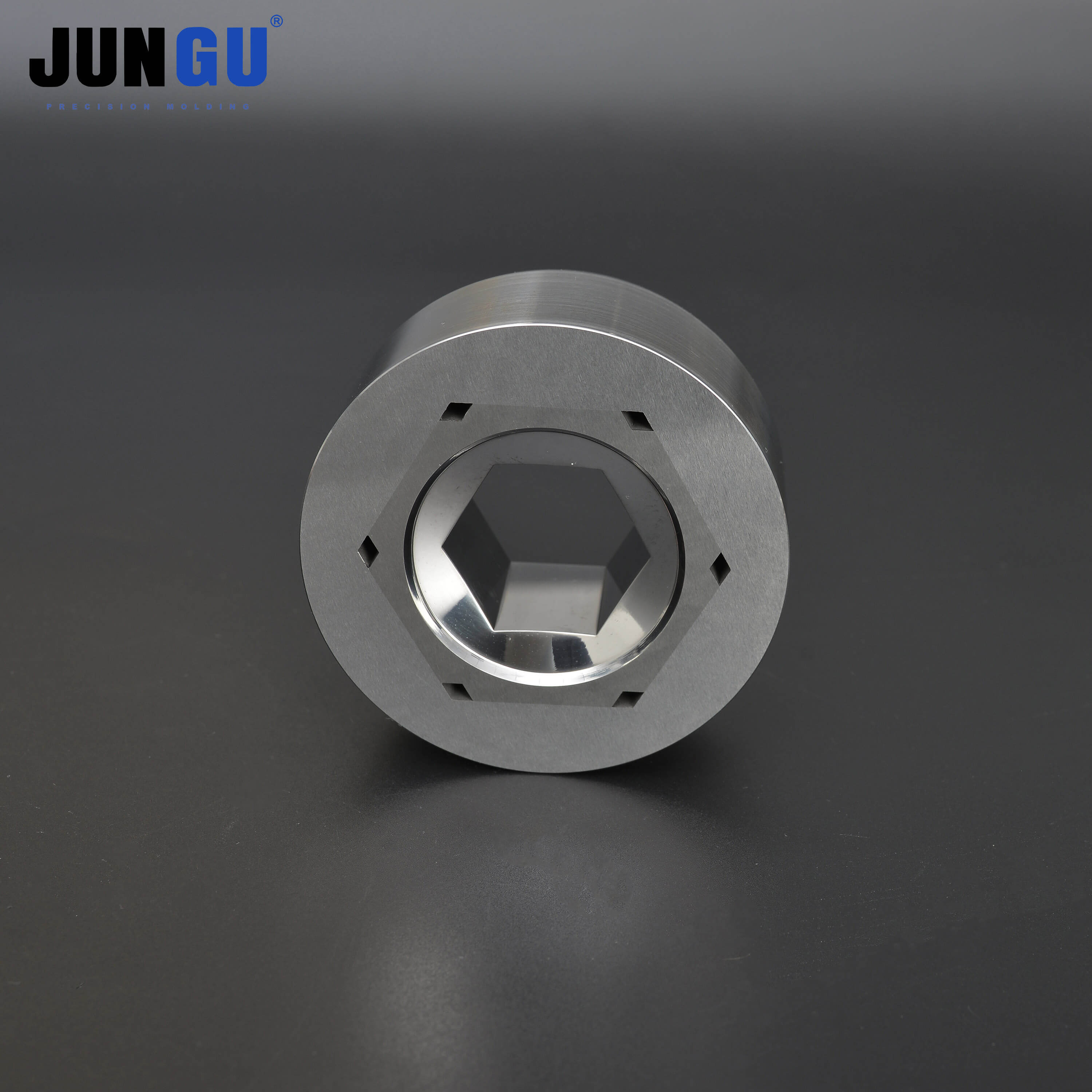
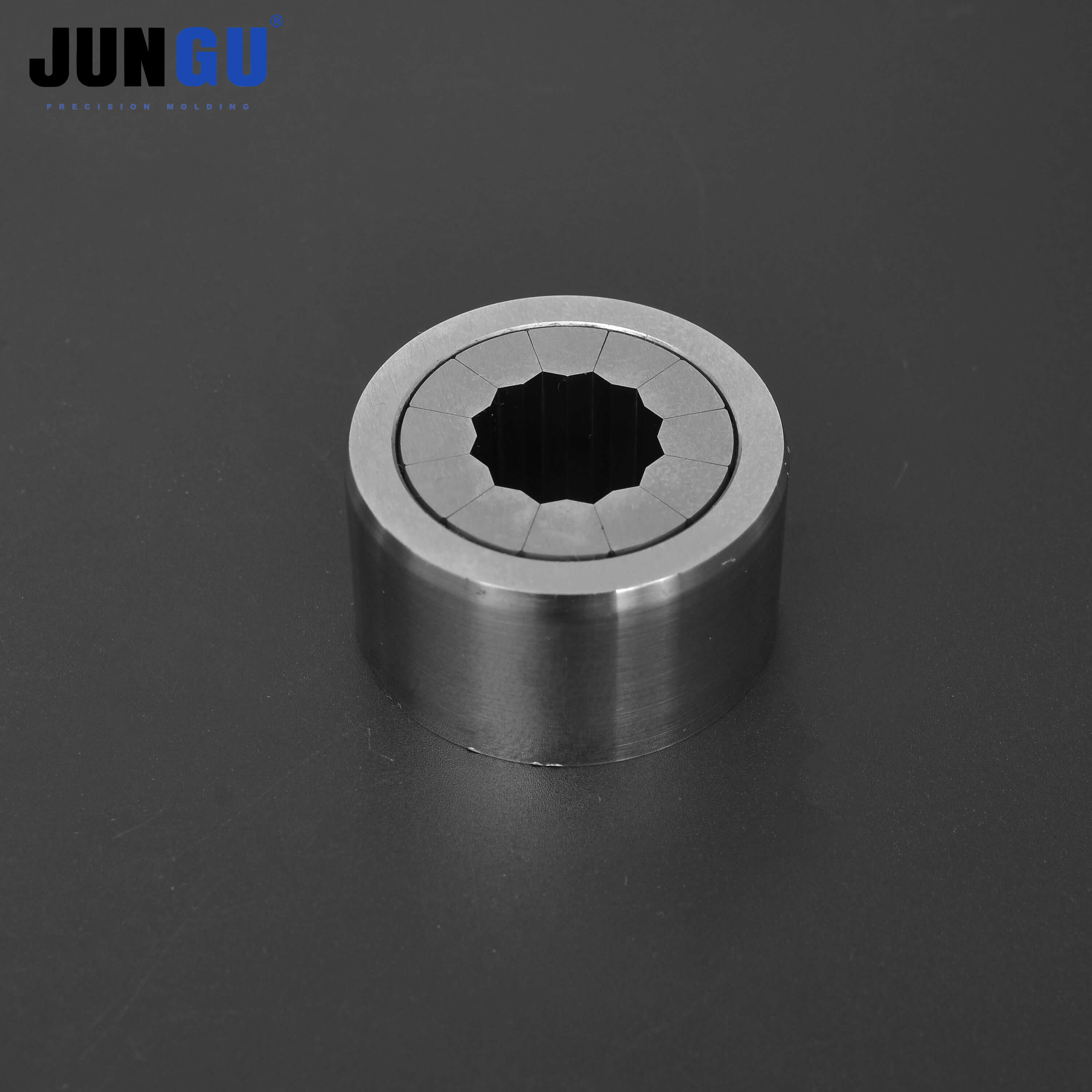
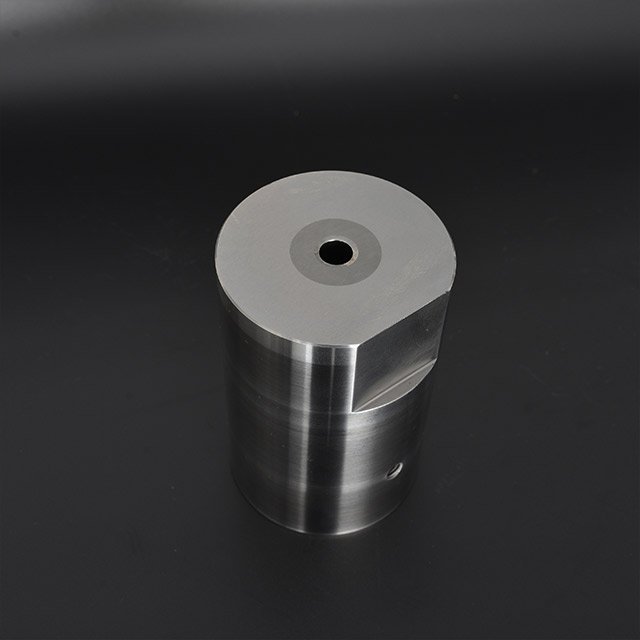
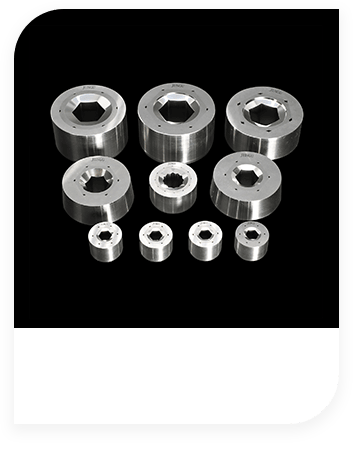
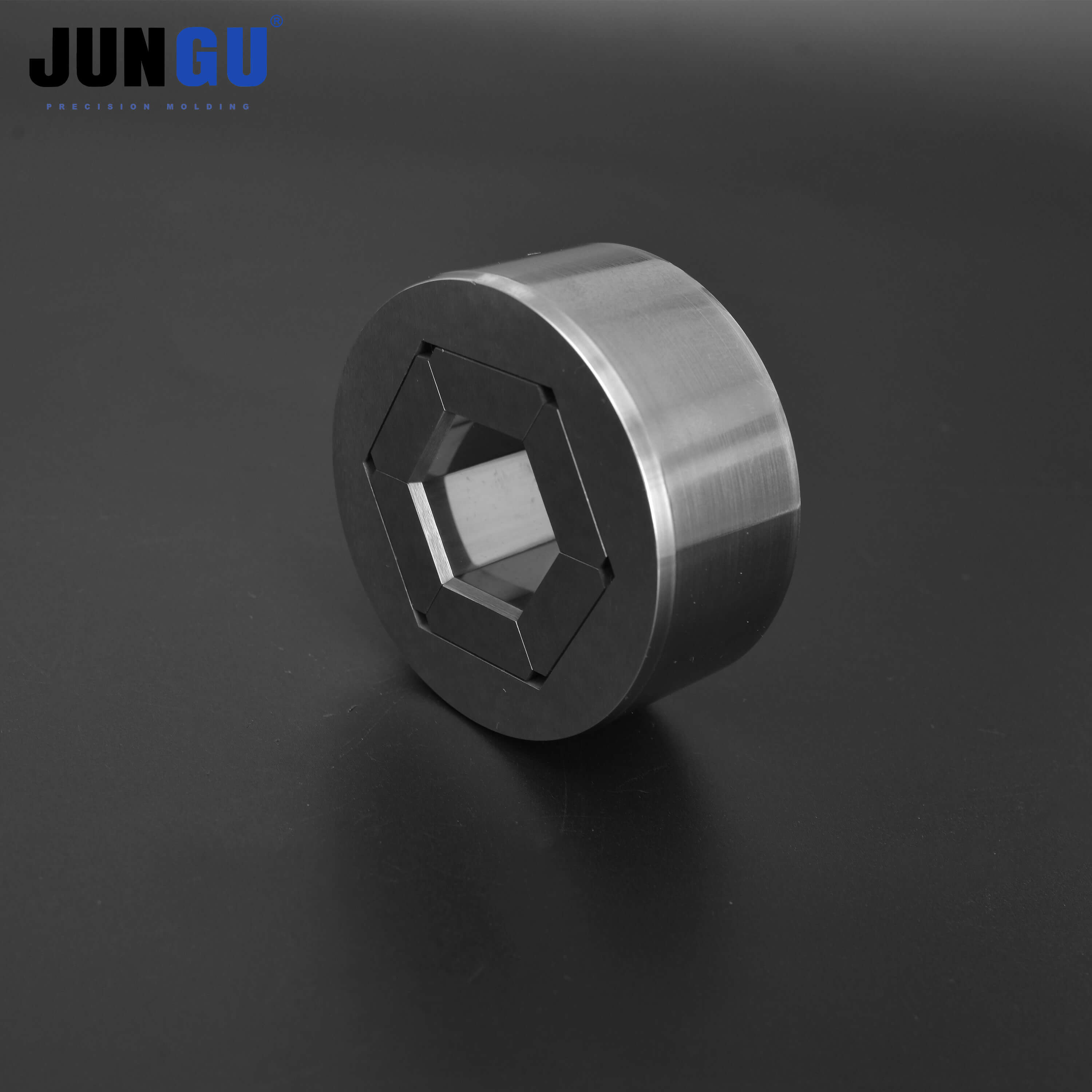
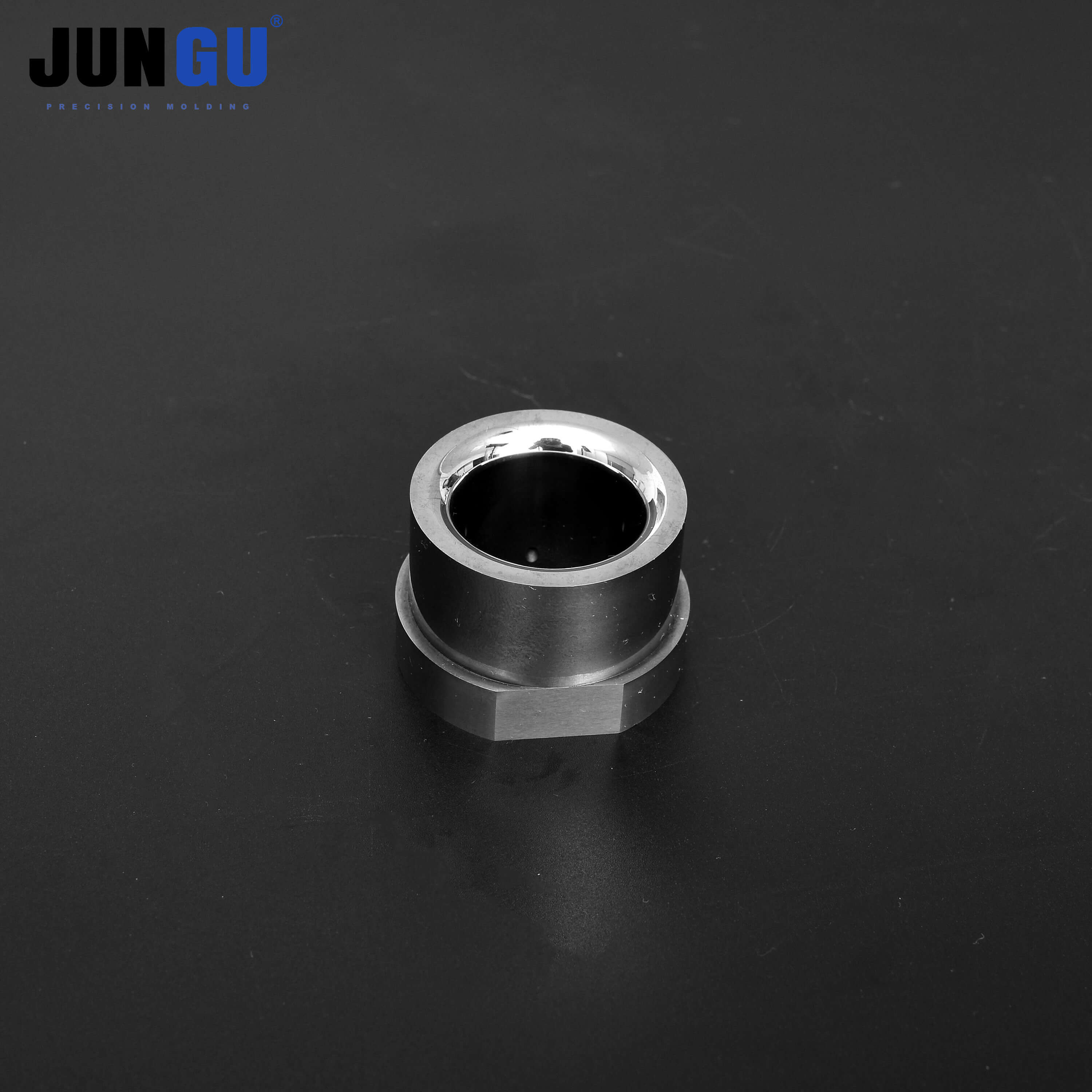
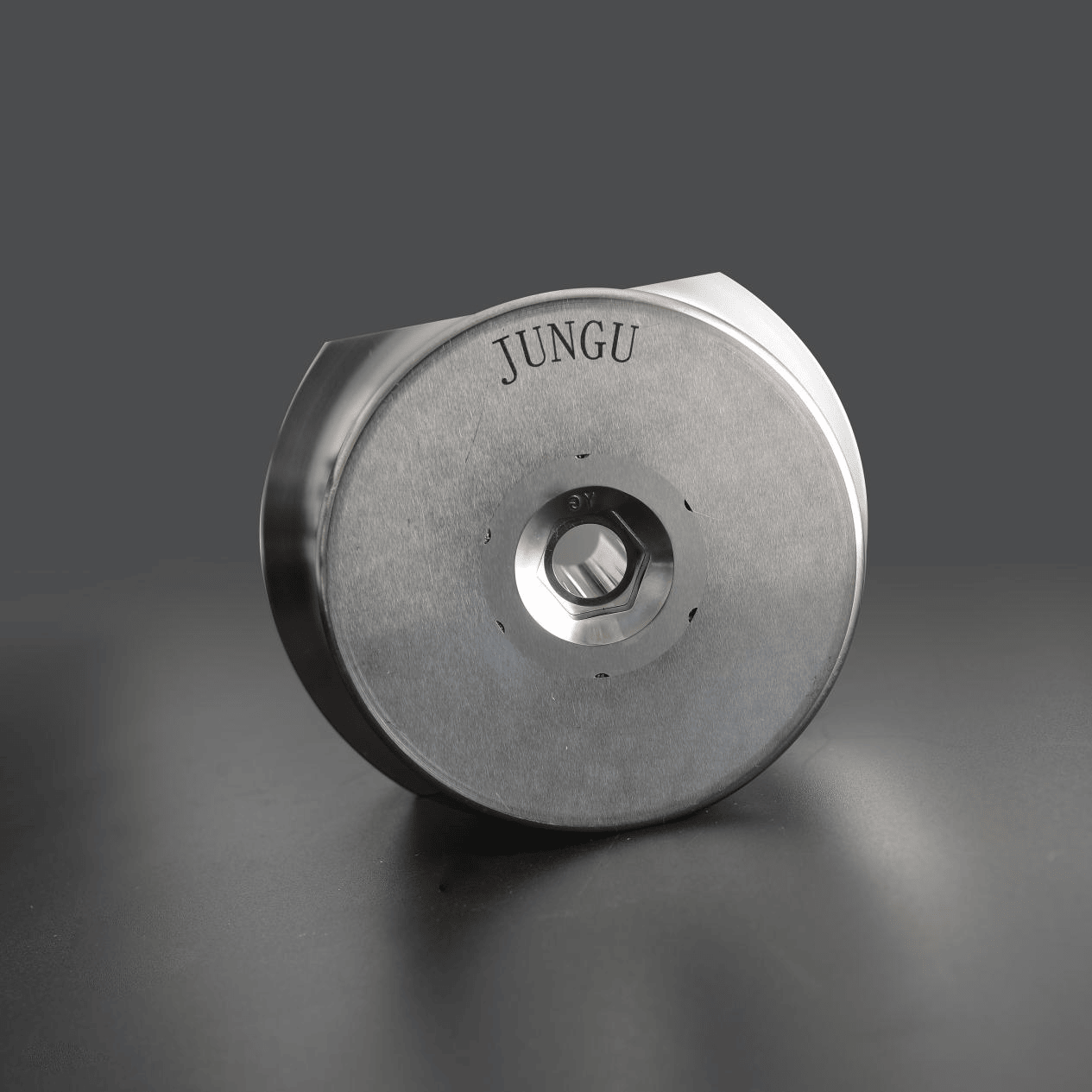
Tungsten carbide dies are precision tools used to shape metal and plastic through stamping, punching, drawing, and extrusion. Their extreme wear resistance makes them ideal for high-volume production runs where maintaining tight tolerances over millions of cycles is critical.
Tungsten Carbide Dies vs. Steel Dies
Steel dies cost less upfront and are easier to machine. They can be heat-treated to improve hardness, and they handle impact loads better than carbide. But for long production runs with abrasive materials, tungsten carbide dies last significantly longer and maintain dimensional accuracy far beyond what steel can deliver.
Steel dies make sense for short runs, frequent design changes, or applications involving shock loading. Tungsten carbide dies justify their higher cost through extended service life in high-volume, high-precision operations.
Working With Tungsten Carbide
Machining tungsten carbide requires diamond-coated tools or grinding wheels. Common methods include grinding with diamond abrasives, electrical discharge machining (EDM) for complex shapes, and laser cutting for fine details. Operators must control speed and temperature carefully — overheating can weaken the cobalt binder, leading to cracks or premature failure.
Safety during machining matters. Fine tungsten carbide dust can irritate lungs and skin. Proper ventilation, dust extraction, and PPE (respirators, goggles, gloves) are essential.
Recycling Tungsten Carbide
Tungsten carbide scrap from worn tools and manufacturing offcuts retains significant value. Recycling recovers both tungsten and cobalt through chemical and mechanical processes. It consumes roughly 70% less energy than mining and refining new tungsten, reduces landfill waste, and lowers production costs. Many manufacturers now operate closed-loop recycling programs, collecting worn parts and reprocessing them into new products.