Tungsten Carbide vs Steel Cold Heading Dies: How to Choose
Short answer: Tungsten carbide cold heading dies can deliver several times the service life of steel dies when abrasive wear is the main failure mode, and they hold tighter tolerances over long production runs. But carbide costs more, takes longer to make, and can chip under shock or misalignment. Tool steel dies (grades such as SKD11, SKH-9, or powder steels like ASP) are tougher, cheaper, and faster to produce, which makes them the better pick for prototyping, low-to-medium volumes, large or impact-heavy tooling, and softer fastener materials. The right choice comes down to three things: production volume, the material you're forming, and the geometry/impact the die will see. Here's a practical framework — plus how Jungu reviews the drawing before recommending carbide, steel, or a hybrid construction.
Source basis: Jungu customer project records and technical review notes. Customer names, drawings, and production data are anonymized unless publication was authorized.
Short answer: Tungsten carbide cold heading dies can deliver several times the service life of steel dies when abrasive wear is the main failure mode, and they hold tighter tolerances over long production runs. But carbide costs more, takes longer to make, and can chip under shock or misalignment. Tool steel dies (grades such as SKD11, SKH-9, or powder steels like ASP) are tougher, cheaper, and faster to produce, which makes them the better pick for prototyping, low-to-medium volumes, large or impact-heavy tooling, and softer fastener materials. The right choice comes down to three things: production volume, the material you're forming, and the geometry/impact the die will see. Here's a practical framework — plus how Jungu reviews the drawing before recommending carbide, steel, or a hybrid construction.
The core difference: hardness vs. toughness
Carbide (tungsten carbide in a cobalt binder, WC-Co) is extremely hard and wear-resistant, but relatively brittle. Tool steel is less hard, but far tougher — it absorbs shock and resists cracking. Almost every trade-off below flows from that one tension.
| Property | Tungsten Carbide (WC-Co) | Tool Steel (SKD11 / SKH-9 / ASP) |
|---|---|---|
| Hardness | HRA 86–92 (very high) | HRC 58–64 |
| Wear resistance | Excellent; often several times steel when wear is the limit | Moderate |
| Toughness / impact | Lower — can chip | Higher — handles shock |
| Tool life at high volume | Highest | Lower |
| Tolerance stability over a run | Excellent | Good, degrades sooner |
| Unit cost | High | Lower |
| Lead time | Longer | Shorter |
| Repair / rework | Limited | Easier |
When tungsten carbide is the right choice
- High volume — long runs where wear, not breakage, is the limit.
- Hard or abrasive wire — stainless steel, high-strength or coated wire that chews through steel dies.
- Tight tolerance over a long run — carbide holds dimensions far longer (see our forming-die tolerances on the bolt & screw forming dies page).
- Aggressive forming — deep upsets and fine features that demand a stable cavity.
When tool steel is the right choice
- Prototyping & frequent design changes — cheaper and faster to remake.
- Low-to-medium volume — carbide's life advantage never pays back at low quantities.
- Large dies or heavy-impact stations — toughness prevents catastrophic cracking.
- Softer fastener materials — wear is mild, so carbide is overkill.
The hybrid most buyers overlook: carbide insert in a steel case
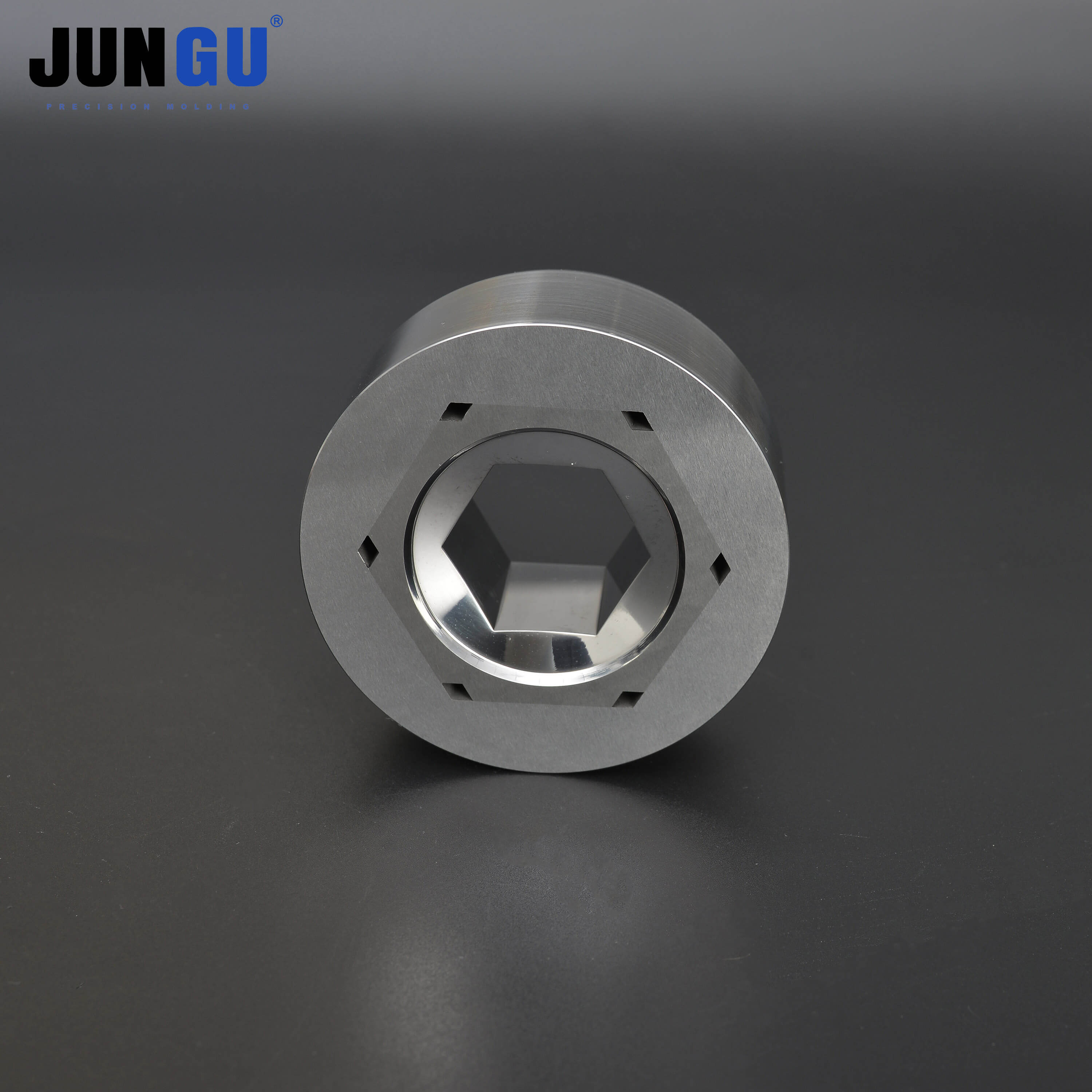
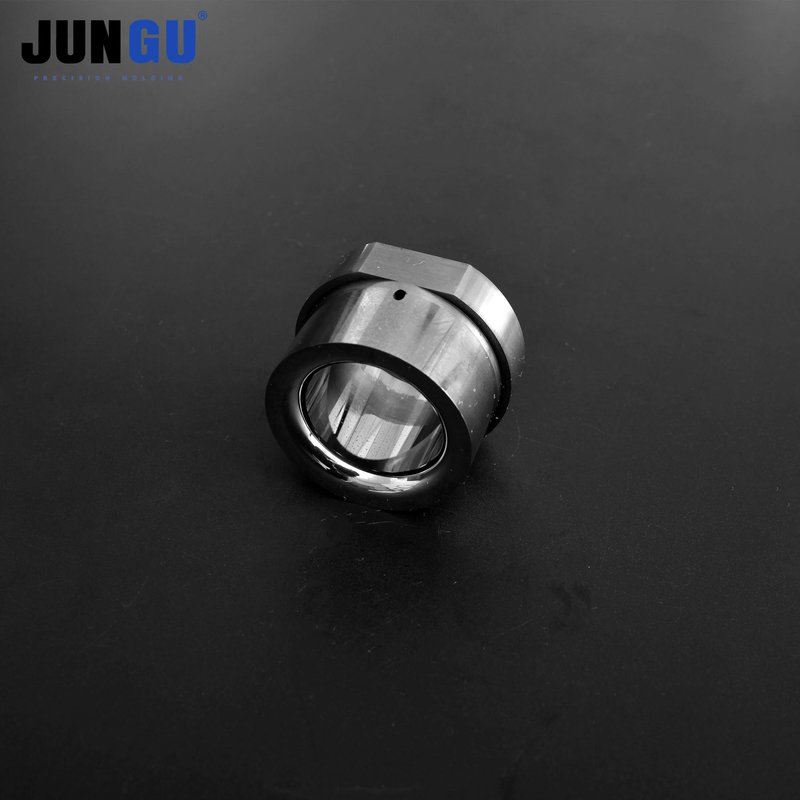
You rarely have to choose all-or-nothing. A carbide insert (die core) in a steel case puts carbide exactly where the forming happens, while the steel case adds toughness, economy, and easier repair/replacement. For complex or segmented geometries we build this as segmented / die-case assemblies. It's often the best cost-per-part answer for mid-to-high volume.
Don't compare unit price — compare cost per 1,000 parts
A carbide die may cost more up front, but if it runs many times longer with fewer changeovers and less scrap, the cost per thousand fasteners is usually lower — and you avoid line stops. Decide on total cost, not sticker price.
Rule of thumb: as volume and wire hardness go up, the economics shift toward carbide. For short runs and soft materials, steel wins.
One common mistake is choosing the hardest material first. Hardness helps only when wear is the dominant problem. If the real problem is shock load, poor alignment, unsupported corners, or insufficient case preload, a harder carbide can fail faster than a tougher steel die. The better decision is to identify the failure mode first, then choose the material and construction.
Quick selection checklist
| Question to ask before quoting | If yes, lean toward |
|---|---|
| Is abrasive cavity wear the main reason the current die fails? | Carbide or carbide insert |
| Is the current failure chipping, cracking, or sudden breakage? | Tougher steel, tougher carbide grade, or stronger case support |
| Is the part still in trial production or changing often? | Tool steel |
| Does the buyer need stable dimensions across a long run? | Carbide insert in a steel case |
| Is the station large, shock-heavy, or sensitive to alignment? | Tool steel or a hybrid design after load review |
How Jungu approaches the choice
We size the tooling to your part material, volume, and station loads rather than defaulting to one material. In practice, Jungu evaluates WC-Co carbide by grain size, cobalt content, die-case support, wire material, lubrication, and station load rather than by hardness alone. For high-volume stainless or high-strength fasteners, we normally consider a tougher fine- or medium-grain carbide with a higher cobalt binder, plus TiCN, TiN, or TiAlN coating when galling or abrasive wear is a risk.
In a drawing review, Jungu does not choose carbide just because the buyer asks for high hardness. We first look at the station where the failure happens, the wire grade, reduction ratio, corner radius, die-case support, shrink-fit or preload condition, lubrication, and whether the buyer is losing tools from abrasive wear, chipping, cracking, galling, or dimensional drift.
For example, if the worn area is a polished cavity surface after a long stainless run, carbide or a coated carbide insert may reduce changeovers. If the failure is a corner crack after impact, simply switching to a harder carbide can make the problem worse; the safer change may be a tougher carbide grade, a larger radius, a stronger steel case, or tool steel for that station. This is why Jungu asks for the drawing, wire material, machine model, station layout, current tool life, and failed-tool photos before quoting.
Because die life depends on wire grade, machine alignment, lubrication, and part geometry, we do not publish one fixed life number. We compare expected cost per part after reviewing the drawing and trial conditions. For automotive stainless fastener programs, a carbide insert in a preloaded steel case is usually the safer starting point when the buyer needs stable dimensions and fewer changeovers.
What to send for a reliable recommendation
A useful RFQ does not need to be complicated, but it should include enough information to separate a wear problem from an impact or support problem. For a first review, send the fastener drawing, wire material and grade, target monthly volume, forming station, machine model, current die material if known, current tool life, and the failure mode you are trying to solve.
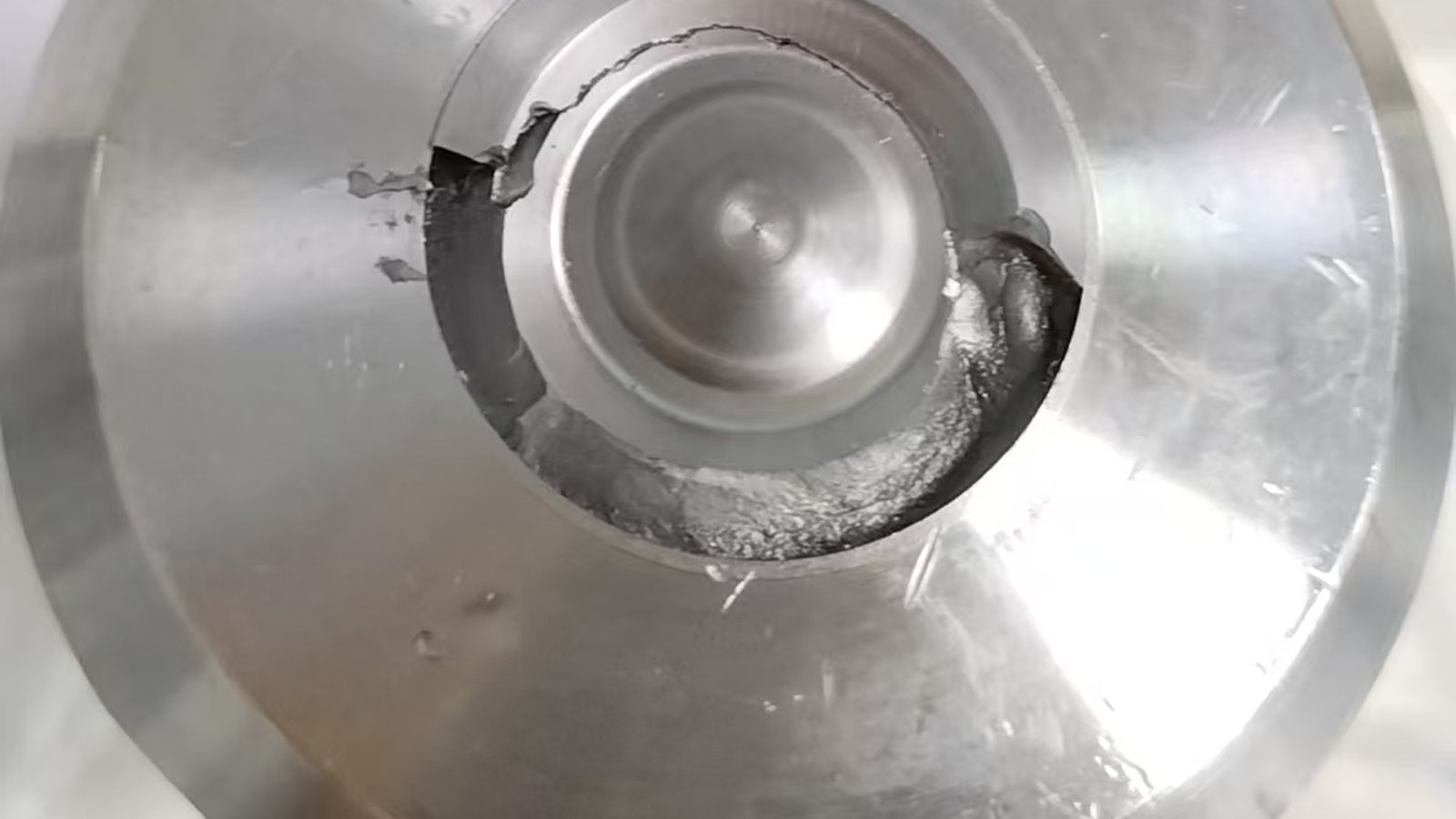
Failed-tool photos are especially useful. A polished worn cavity, edge chipping, corner cracking, galling marks, and uneven wear point to different causes. With those details, Jungu can recommend whether the better move is carbide, tool steel, coating, a different carbide grade, a larger radius, tighter shrink fit, or a steel case with stronger support.
Have a drawing? Send it over and we'll recommend the material, grade, and construction for your volume — request a tooling quote. For application examples, see Jungu's fastener mould business overview.
FAQ
Do carbide cold heading dies really last longer than steel dies?
Yes, when abrasive wear is the main limit. In high-volume stainless, high-strength, or coated-wire production, carbide can run several times longer than steel, and 5–10× can be realistic in the right conditions. If the tool fails from impact, cracking, or poor support, carbide may not last longer until the root cause is corrected.
Why do tungsten carbide cold heading dies crack?
Carbide is hard but brittle, so cracking usually comes from shock loads, misalignment, overloading, or an unsupported cavity — not normal wear. Correct die-case support, alignment, and grade selection prevent most failures. Jungu reduces this risk by matching carbide toughness to the forming load, using steel cases or preloaded assemblies where support is needed, controlling shrink fit and corner radii, polishing high-stress contact areas, and checking press alignment before long production runs.
Can carbide dies be repaired?
Only to a limited degree — minor wear can sometimes be re-ground, but cracked carbide is generally replaced. A carbide-insert-in-steel-case design makes replacement cheaper because you swap the insert, not the whole tool.
Which is cheaper overall, carbide or steel?
Steel has the lower unit price; carbide usually has the lower cost per part at volume thanks to its longer life and fewer stoppages. Compare cost per 1,000 parts, not the price of one die.
What carbide grade should I use for stainless steel fasteners?
Stainless is abrasive and work-hardens, so it generally calls for a tougher grade with a slightly higher cobalt content (and often a coating). As a starting point, choose a fine- or medium-grain WC-Co grade balanced for toughness rather than maximum hardness, then confirm the exact grade and coating after checking the wire grade, forming station, reduction ratio, lubrication, and expected production volume.
What Should a Carbide-versus-Steel Quotation Compare?
Compare the complete tooling route, not just the material name. Ask for the proposed grade, insert and case arrangement, inspection requirements and any repair allowance. A lower unit price may exclude a supporting component; a higher price does not prove longer life.
Use documented carbide grade properties to check the recommendation, then compare it with the actual failure mode. For recess punches and other slender working sections, the punch breakage checklist separates wear-driven selection from impact and support problems.