
Tungsten Carbide Hardness: HRA, HV and Grade Selection
Tungsten carbide hardness is not one fixed value. Compare HRA, HV, binder content, grain size, toughness, and grade selection for cold heading dies.
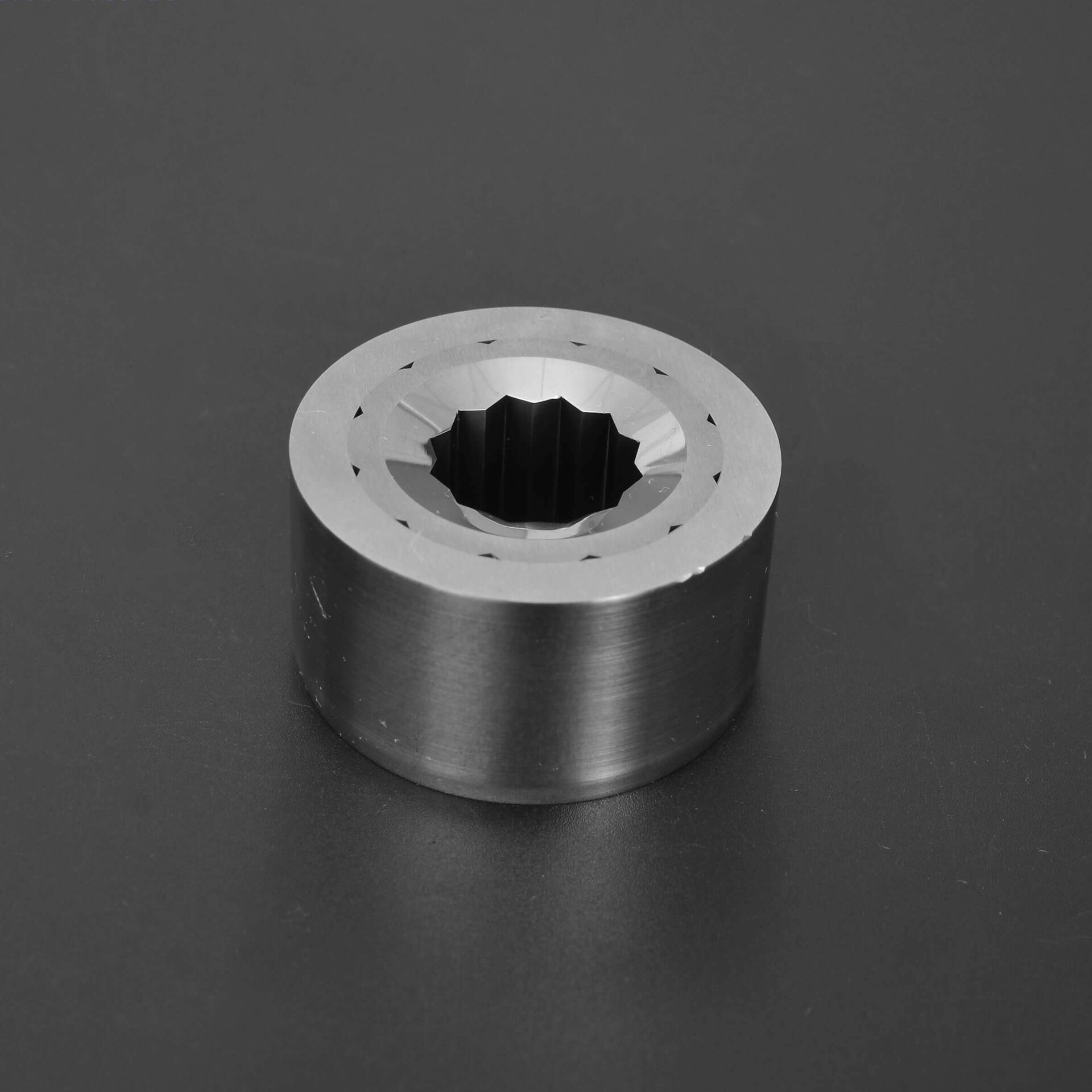
How Hard Is Tungsten Carbide?
Tungsten carbide does not have one universal hardness value. A cemented-carbide grade combines hard tungsten-carbide grains with a metallic binder, so its measured hardness changes with binder percentage, grain size, manufacturing route, porosity, and test method. In one supplier comparison sheet used during our material review, the listed grades span roughly 81 to 93 HRA. That is a grade range from a specific document, not a universal specification for every manufacturer.
For a cold heading die buyer, the practical question is not "Is carbide hard?" It is whether the selected grade has enough wear resistance for the material being formed while retaining enough toughness and edge support for the actual load. Writing only "tungsten carbide" on a drawing leaves that balance undefined.
What Do HRA, HV, and Mohs Actually Tell You?
| Scale | What it measures | Useful role | Procurement caution |
|---|---|---|---|
| Rockwell A (HRA) | Indentation hardness under the Rockwell A method | Routine comparison of hardmetal grades | Compare values measured and reported under the same method |
| Vickers (HV) | Indentation hardness calculated from a diamond impression | Hard materials and local measurement areas | Test force and reporting condition must accompany the number |
| Mohs | Relative scratch resistance | Broad mineral comparison | Too coarse for selecting a production die grade |
The relevant current method pages are ISO 6507-1:2023 for Vickers hardness and ISO 6508-1:2023 for Rockwell hardness. A value written without its scale, test condition, and source is incomplete technical data.
Why Is the Hardest Grade Not Always the Best Die Grade?
Lower binder content or a finer grain structure can raise hardness and wear resistance, but the same grade may be less tolerant of impact, misalignment, interrupted loading, sharp geometry, or inadequate radial support. A die can therefore chip early while its material certificate still shows a high hardness number.
We select the grade together with insert geometry, carbide wall thickness, case support, shrink-fit route, workpiece material, lubrication, forming station, and observed load path. If the previous tool failed by a clean brittle fracture, simply ordering a harder grade can move the new tool in the wrong direction. If it failed by steady abrasive wear with stable support, a harder or finer-grained route may deserve review.
How Should a Supplier Grade Comparison Sheet Be Used?
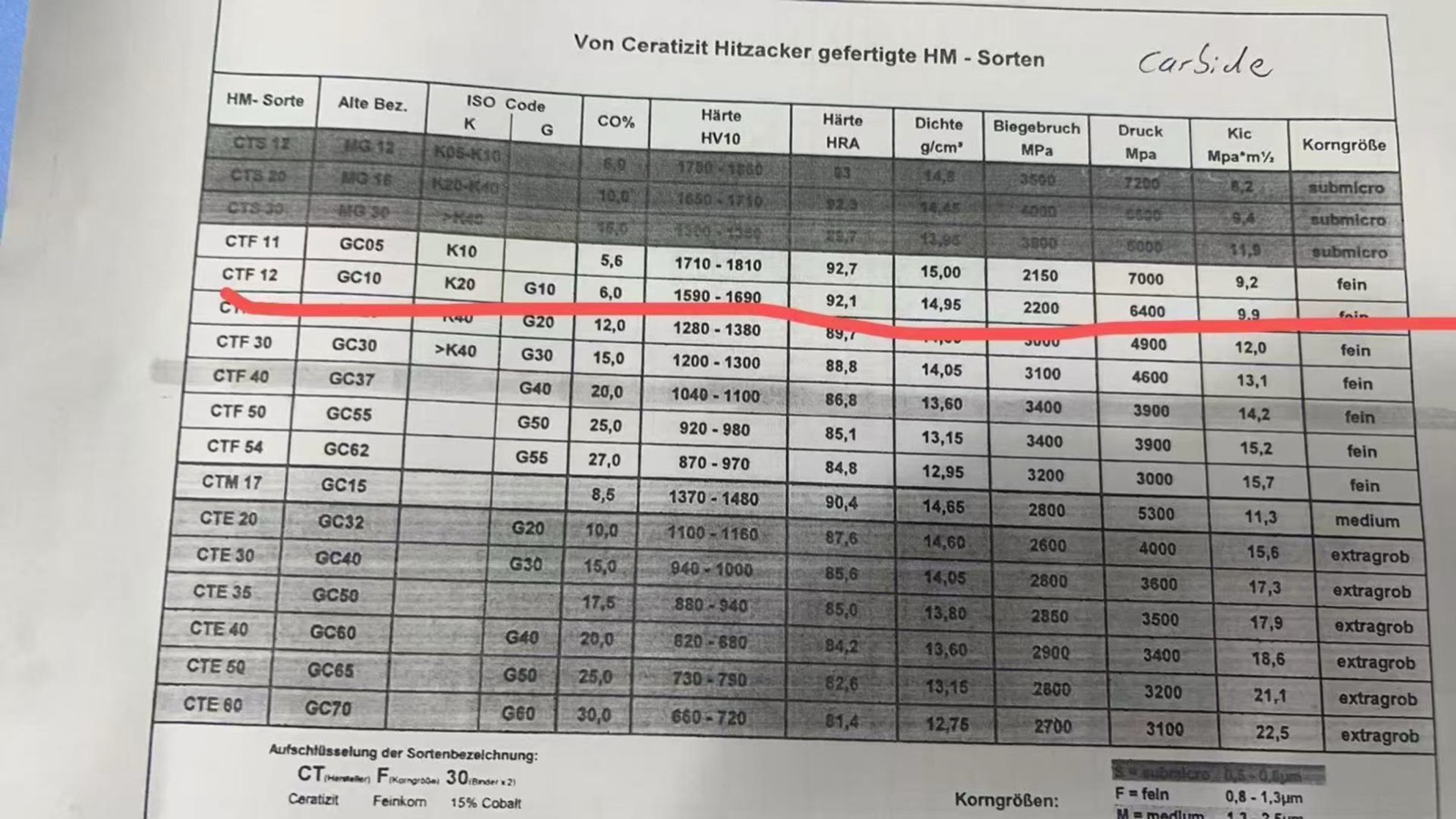
Use a comparison sheet to identify candidate grades and the property balance that the supplier intends. Then confirm the current technical datasheet and certificate for the material actually supplied. Old trade names and approximate cross-references can remain in circulation after a grade or production route changes.
Is Tungsten Carbide as Hard as Diamond?
No. Diamond is harder in scratch and indentation terms, but that comparison does not decide whether a cold heading die will survive. Diamond, cemented carbide, tool steel, and engineering ceramics have different fracture behavior, manufacturable geometry, joining methods, size limits, and cost.
For fastener tooling, a useful comparison is operational: can the selected grade resist wear while keeping the edge supported under cyclic forming load? A slightly lower hardness with better fracture resistance may outperform a harder grade in an impact-heavy station. The opposite may be true in a well-supported sizing operation dominated by wear.
How Does the Existing Failure Mode Guide Grade Selection?
| Observed failure | Material question | Non-material checks before changing grade |
|---|---|---|
| Progressive bore or land wear | Is more wear resistance needed? | Lubrication, surface finish, workpiece coating, alignment |
| Edge chipping | Is the grade too brittle for the load? | Radius, support, overload, material seam, handling |
| Radial or through crack | Does the insert need more toughness? | Shrink fit, case geometry, wall thickness, assembly damage |
| Pitting or staining | Is the binder compatible with the coolant? | Coolant concentration, pH, cleaning, shutdown storage |
Failure-led selection prevents the hardness number from becoming the whole specification. Our guide to chipping, cracking, wear, and incomplete fill explains what evidence to preserve before the failed surface is cleaned or polished.
What Information Is Needed to Select a Carbide Grade?
- Finished-part drawing, forming sequence, and the station using the carbide insert
- Wire grade, condition, coating, hardness, or tensile-strength range
- Machine model, production rate, lubrication, coolant, and shutdown condition
- Insert and case dimensions, support geometry, and assembly or shrink-fit route
- Current tool history and close-up photographs showing where wear or fracture starts
- Current carbide grade and supplier certificate, if available
What Should a Material Certificate or Grade Sheet Show?
Ask for an identifiable grade, hardness value and scale, density, binder content or composition basis, and the supplier's relevant strength or toughness data. The batch certificate should be traceable to the material used in the insert. If a comparison uses another manufacturer's trade name, treat it as an initial reference rather than guaranteed equivalence.
Equivalent-looking labels can hide differences in grain size, binder chemistry, additives, porosity control, pressing, and sintering consistency. Those differences are why two inserts with similar HRA may behave differently in the same cold heading station.
To continue the selection, compare tungsten carbide and steel cold heading dies, or send the part, insert, and case drawings through our bolt and screw forming die review page.
What Do Buyers Commonly Ask About Carbide Hardness?
Can I convert HRA directly to HV?
Conversion tables are approximate and depend on material behavior. For a purchase specification, use the scale and method stated by the material supplier instead of treating a converted number as a new test result.
Does the highest HRA guarantee the longest die life?
No. Life depends on failure mode, support, geometry, workpiece material, lubrication, machine condition, and the carbide grade. High hardness cannot compensate for an unsupported insert or incorrect shrink fit.
Can two suppliers' grades be called equivalent?
They can be compared as candidates, but identical performance should not be assumed from a cross-reference alone. Review current datasheets, certificates, and application evidence before substitution.
How Should You Compare Wear-Test Evidence Before Ordering Dies?
A laboratory wear value is not a prediction of parts per cold heading die. Ask which test was used, which grade and specimen were tested, and whether the load, counterface, lubricant and surface finish match the comparison being offered. Results from different methods should not be placed in one ranking without those conditions.
| Evidence | Useful for | Does not establish |
|---|---|---|
| Hardness and supplier grade data | Checking the specified material and comparing documented properties | Life of the assembled tool on your machine |
| Controlled laboratory wear test | Comparing specimens under the stated test conditions | Resistance to every impact or cracking mechanism |
| Production trial on the same part | Comparing dimensional drift and accepted output under recorded conditions | A universal service-life guarantee for other jobs |
For a procurement trial, agree the drawing revision, rejection limit and inspection intervals first. Record accepted parts and the reason for tool removal. Send this record with the worn die rather than choosing a grade from hardness alone. Use our cold heading die supplier checklist to compare the evidence offered with a quotation.