
Thread Rolling vs Thread Cutting for Fasteners
Compare thread rolling and thread cutting for bolts and screws. Review volume, material, blank diameter, tolerance, machine fit, and RFQ data.
When Should a Fastener Thread Be Rolled Instead of Cut?
Choose thread rolling when the material can be cold formed, repeat volume justifies dedicated dies, and the pre-roll blank diameter can be held consistently. Choose cutting for prototypes, small batches, difficult access, unusual geometry, or parts that must receive their thread after hardening. Depending on hardness and tolerance, a hardened part may require grinding rather than ordinary cutting.
Rolling can improve throughput, surface finish, and fatigue behavior, but those gains are conditional. Material condition, blank preparation, die profile, lubrication, and machine alignment must work as one process. A rolled thread with laps or overfill is not automatically better than a correctly cut thread.
How Do Rolling and Cutting Differ in Production?
| Decision point | Thread rolling | Thread cutting | Buyer check |
|---|---|---|---|
| How the thread forms | Material flows from the future root toward the crest | A cutting edge removes material as chips | Confirm whether cold working is acceptable |
| Production pattern | Strong fit for stable, repeat production | Flexible for prototypes and shorter batches | Compare annual volume and changeover frequency |
| Starting diameter | Pre-roll blank diameter, tolerance, and roundness are critical | Blank starts near the finished major diameter | Send measured minimum and maximum, not nominal only |
| Surface and root | Profile is formed and burnished by the die | Surface follows tool condition, speed, and feed | Define finish and inspection requirement |
| Tooling setup | Machine, die type, entry, lead, and holder must match | Tool geometry, workholding, speed, and feed must match | Review the complete process before pricing |
What Mechanical Advantage Can Rolling Provide?
Rolling forms the thread around the material flow instead of cutting across it. With a suitable material and controlled process, the root can have a burnished surface and favorable compressive residual stress. Those conditions can improve fatigue resistance, which is one reason rolling is common in high-volume bolt and screw production.
The process can also work against the part. An oversized blank raises forming pressure and may create laps or overfill. Surface decarburization, seams in the wire, poor lubrication, and die misalignment can remove the expected benefit. We therefore treat the finished thread profile and its failure evidence as process data, not proof that rolling itself is correct.
When Is Thread Rolling the Wrong Route?
- The material lacks cold formability: cracking or surface tearing may occur before a complete profile forms.
- The batch is too small: dedicated dies and setup may not be justified for a prototype or repair quantity.
- The geometry blocks die access: shoulders, recesses, or a thread close to another feature may require cutting or another process.
- The thread is added after hardening: the available hardness may be outside the practical range of the rolling setup.
- The blank cannot be controlled: inconsistent diameter or roundness causes fill variation and unstable forming pressure.
When Do Flat and Cylindrical Thread Rolling Dies Fit?
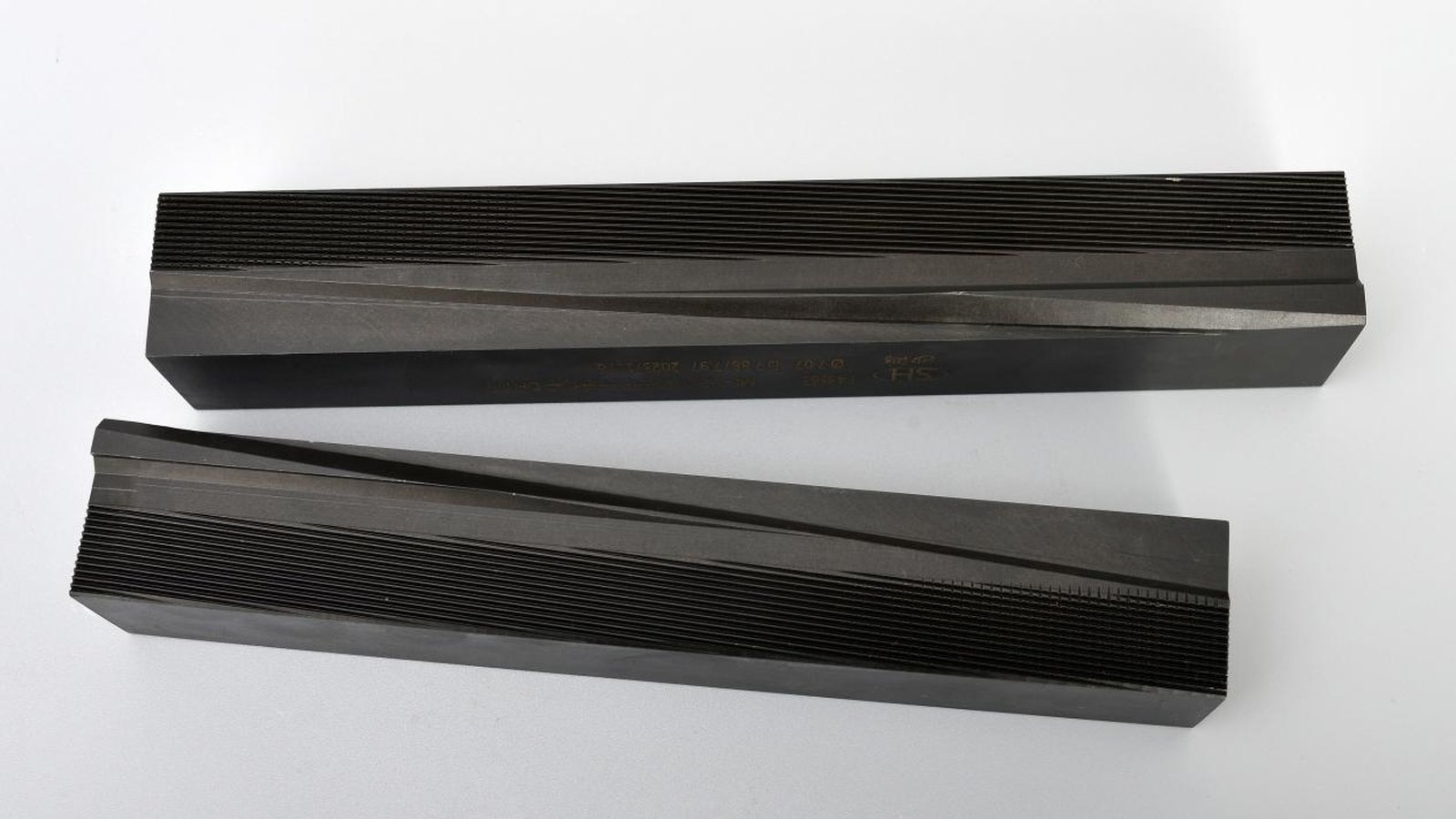
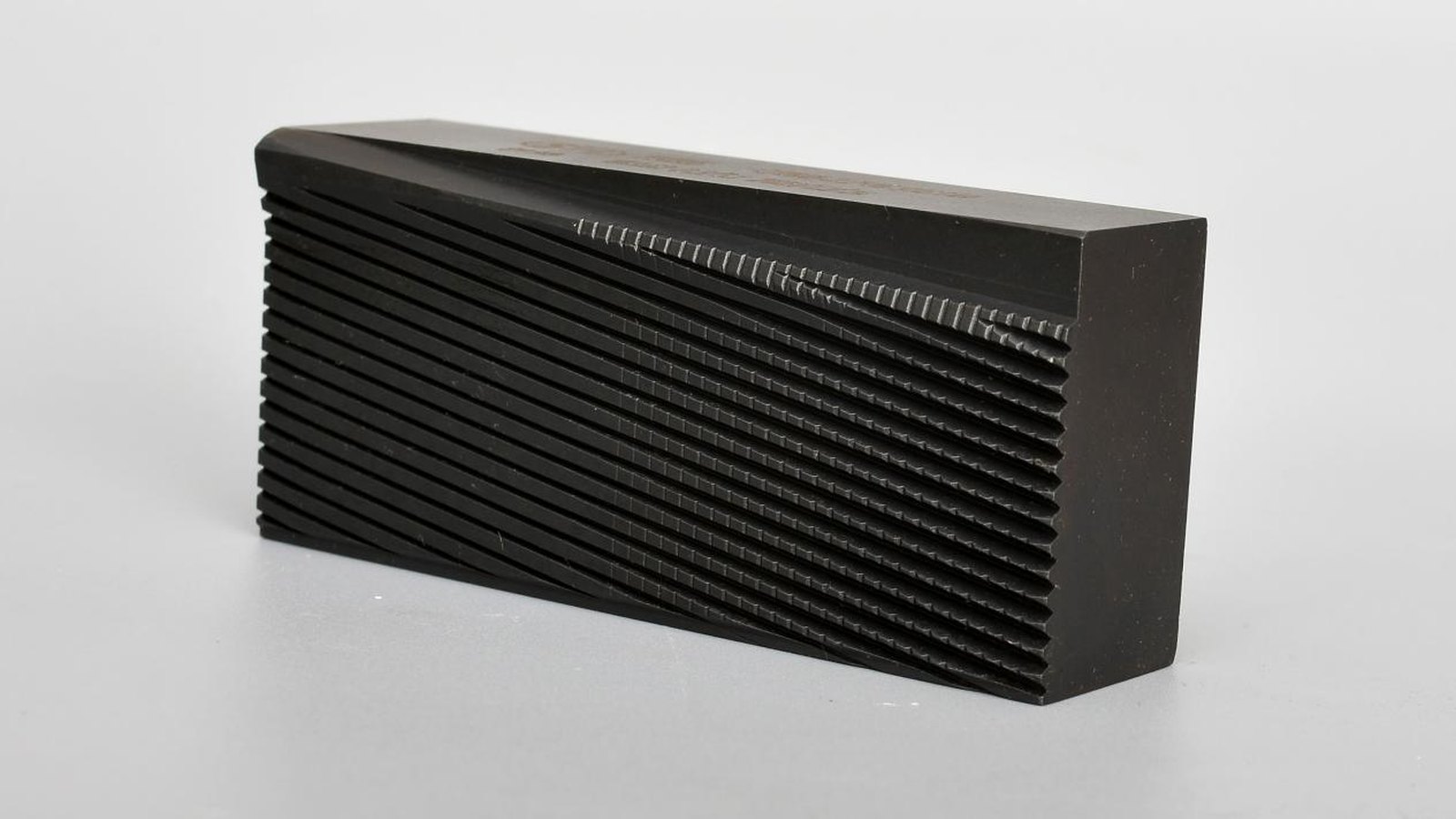
Flat dies are widely used for high-output screw and bolt production: one die remains stationary while the other moves. Cylindrical dies work in two-roll or three-roll machines and are often considered for longer rolling lengths, controlled feed, or workpieces that need continuous support. These are not interchangeable catalogue choices. The machine interface fixes the die family before material, coating, or price is discussed.
- Confirm machine maker, model, and die-holder dimensions.
- State whether the process is flat, two-roll, three-roll, or planetary.
- Provide thread standard, pitch, tolerance class, rolling length, and run-out requirement.
- Specify wire grade, condition, surface coating, and target production rate.
- Include the existing die drawing if the new tooling must fit an established setup.
Which Defects Point to the Process Rather Than the Die Material?
| Observed result | First process checks | Why a harder die may not help |
|---|---|---|
| Truncated or incomplete crest | Blank diameter, penetration, material volume | Hardness cannot supply missing material |
| Flakes, folds, or laps | Oversized blank, entry alignment, wire surface | Higher wear resistance does not correct trapped material |
| One-sided flank wear | Parallelism, holder wear, work-rest height | The load remains uneven on the replacement |
| Double tracking or pitch error | Timing, feed, die synchronization, exit | The profile can be correct while machine motion is wrong |
What Should a Thread Rolling Die RFQ Include?
Send the finished-part drawing, thread standard and class, pre-roll blank diameter with actual tolerance, material grade and condition, machine model, die-holder dimensions, current die drawing, target output, and clear photos of the present wear pattern. If the part currently uses a cut thread, add annual quantity and explain why the process is being changed.
Our thread rolling dies manufacturing page covers flat and cylindrical tooling. The supplier evaluation checklist explains what to compare after the machine and blank data are complete.
What Do Buyers Ask Before Changing the Thread Process?
Can the same finished thread drawing be used for rolling and cutting?
The finished specification is the same starting point, but rolling also needs a pre-roll blank specification, entry design, machine interface, and material condition. The finished drawing alone is insufficient for die manufacture.
Does thread rolling always make a stronger thread?
No. It can improve root condition and fatigue performance when the material and process are controlled. Laps, seams, decarburization, or overfill can cancel that advantage.
Can a supplier quote before knowing the machine model?
Only as a preliminary estimate. Die dimensions, mounting, motion, lead, and capacity depend on the machine. A production quotation should follow a machine and holder review.