
Cold Forging Dies for High-Strength Steel: Specify the Incoming Wire
When sourcing cold forging dies for high-strength steel bolts, specify the condition of the wire entering the header separately from the finished bolt's property class. The first describes the material the die actually forms. The second describes the performance required of the finished fastener. A quote based on the finished class alone leaves a central tooling input unresolved.
Identify which route delivers the final strength
Nippon Steel's technical report on cold-heading wire rod describes a conventional route in which wire is prepared before heading and the formed bolt is quenched and tempered later. The forming dies therefore do not work on the bolt in its final heat-treated condition. Nippon Steel also describes specific wire grades and routes without post-forging quenching and tempering. That is a material and process choice, not permission to omit heat treatment from an existing drawing.
For the RFQ, mark which operations happen before the header and which happen after it. If wire is drawn or otherwise prepared in-house, distinguish its delivered condition from its condition at the first forming station. Ask the wire supplier which test data represent the actual feedstock. Do not substitute the finished bolt's test report for the wire data.
Separate the records before sending drawings
| Record | What to provide | Why it matters |
|---|---|---|
| Finished fastener | Drawing revision, required property class, final inspection and approved downstream route. | Defines the final acceptance requirements. |
| Wire at the header | Grade, diameter, lot identity, preparation history, available strength or hardness data with test method, and surface or lubricant condition. | Identifies the material condition for the tooling review. |
| Forming operation | Machine model, station drawings, intermediate shapes and mating tool details. | Connects the wire data to the actual operation instead of assuming identical deformation at every station. |
| Trial acceptance | Agreed checks on as-formed parts, separately from final tests after downstream processing. | Keeps a tooling trial from being mistaken for finished-fastener qualification. |
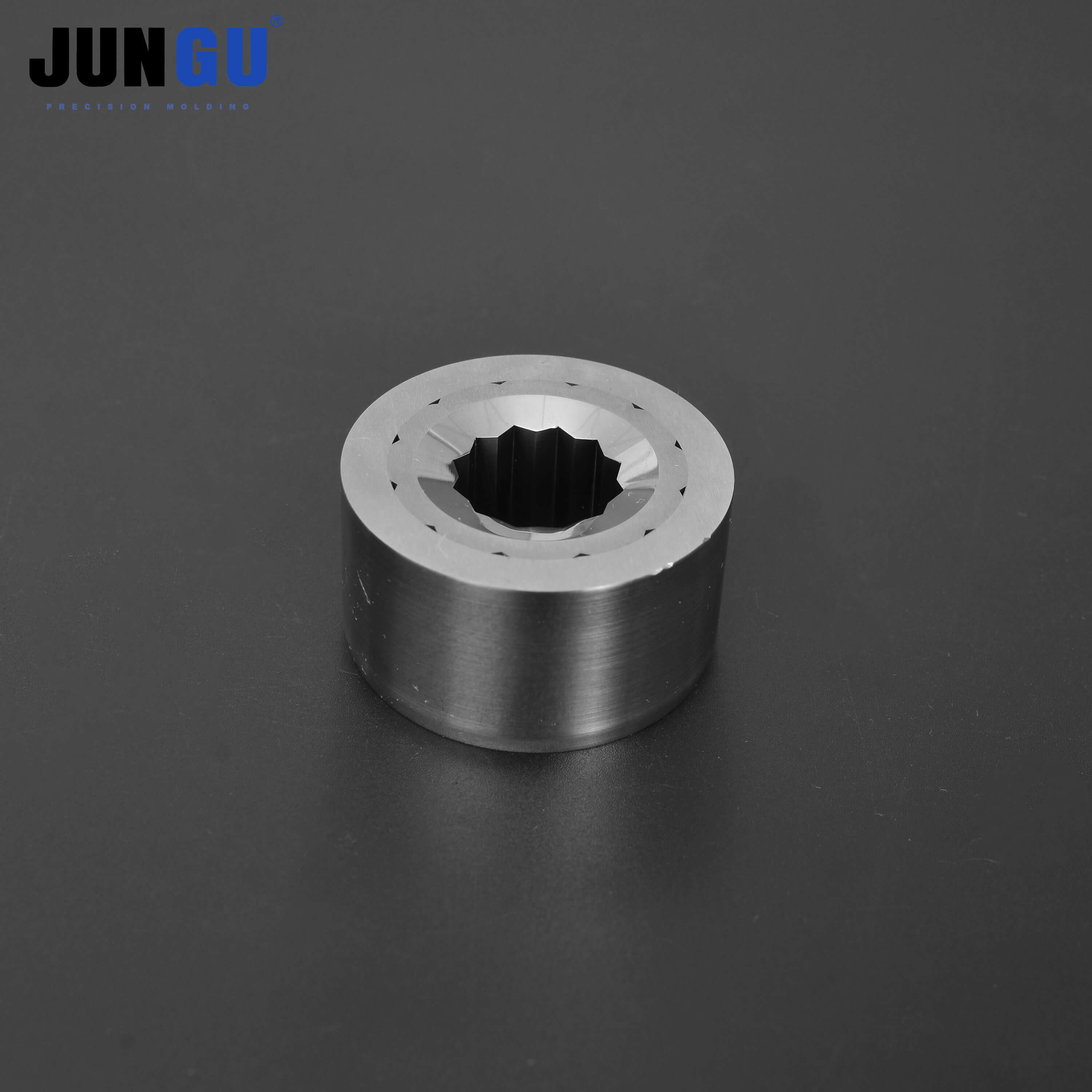
Use the forming-sequence review to match the intermediate parts to the station drawings. If you already know the assembly scope, refer to Jungu's bolt and screw forming dies and multi-station carbide bolt die tooling when identifying the component to quote.
Handle a change in wire without losing the comparison
Suppose two jobs call for the same finished property class. One uses wire prepared for heading and reaches the required properties through later heat treatment. The other uses a separately approved wire and processing route. Treat these as different tooling review cases even if the finished drawing is unchanged. The example illustrates the information gap; it does not establish that one route is harder on the tooling.
If a wire change coincides with cracking or wear, retain the earlier accepted lot information and identify where the first visible defect appears. Send labelled intermediate samples or photos, the tooling revision and any concurrent setup changes. This gives the reviewer a basis for separating a material change from a station or tooling change. Do not pick a harder insert solely from the finished class or from a photograph of one failed part.
Questions before ordering
Can we start an enquiry without the final wire lot?
Yes. Mark the intended grade, preparation and available data as provisional. Ask which missing inputs must be confirmed before tool design or trial acceptance is agreed.
Does a successful forming trial prove the final property class?
No. Record the as-formed geometry and defects at the relevant stage, then verify finished-fastener properties under the approved inspection plan.
Send Jungu the fastener and station drawings with the incoming-wire information for a tooling review. For replacements, include the retained components and the last accepted setup.