
Flat Thread Rolling Dies: Check the Pair After Setup
After a flat thread rolling die change, check whether the stationary and moving dies leave impressions that meet on a setup blank. Record that match separately from the finished thread inspection. A recurring offset at the start of rolling calls for a setup review before you order another die set.
What does it mean for flat dies to match?
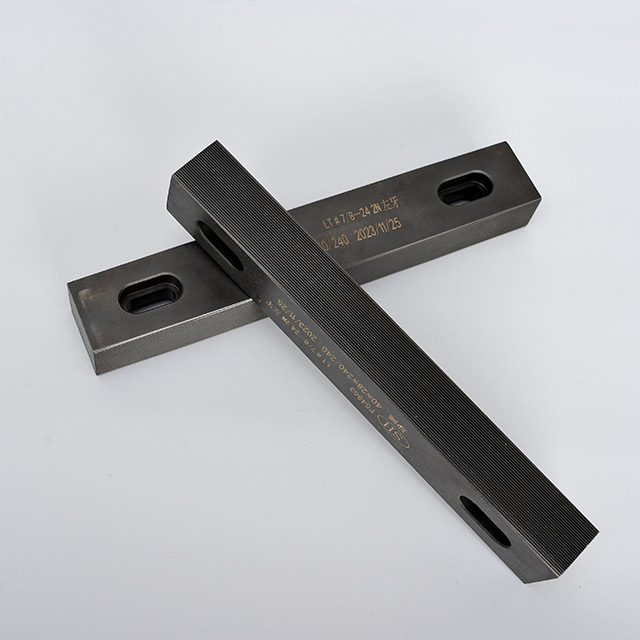
In a reciprocating flat die machine, the moving die rolls the blank against the stationary die. At pickup, the grooves must register so the impressions from the two faces continue along the intended thread. Two dies can carry the same nominal pitch yet still leave offset impressions if the installed positions or the point at which the blank enters are wrong.
Reed Machinery's flat die technical guide shows aligned and offset impressions on a marked setup blank. If your machine supports an impression check, have a trained setter follow its approved setup procedure. Keep the sample identified with the die set and mark the side used as the reference. Photograph the transition between impressions and include a wider view that shows its position on the shank.
Separate a mismatch from a change during the run
| Observation | What to review |
|---|---|
| Repeated offset on setup blanks | Verify the die identities, orientation, installed position and where the feeder presents the blank. Compare the setup with the last accepted run. |
| Setup impressions line up, but a second track appears in the run | Record which pieces are affected, the speed at which the defect appears and any change in blank lot, surface condition or lubricant. Review feed and slip with the setter before condemning the pair. |
| Impressions line up, but the finished thread fails inspection | Record the actual failed check. Review finished dimensions and thread form against the drawing, then compare with the approved blank and setup records. |
Volz and Groche's flat die experiments found that slip behaviour varied with the lubrication system and stroke rate in their tests. Record both conditions when a defect appears after setup. The study does not establish a speed or lubricant setting for your machine.
What to send for a replacement pair
Send both die identifiers and drawings, the machine model and die pocket dimensions, and the fastener drawing with the complete thread callout. Add the measured pre-roll blank diameter, the setup impression photo and a finished sample or inspection report. If a single die is missing, include the surviving die's condition and revision so the supplier can assess whether it can be paired.
See Jungu's flat dies for screws and bolts and the thread rolling tooling range. For the blank itself, see the pre-roll blank diameter guide.
Does an aligned impression release the first piece?
An aligned impression supports the setup check. Release the finished part using the drawing's dimensional, visual and applicable gauge requirements.
Send Jungu the die drawings and setup sample photos for a replacement tooling review.