
Segmented Dies
Tungsten Carbide Hexagonal Die for Metal Fasteners
Tungsten carbide hexagonal die tooling for metal fastener forming. Jungu checks hex corner radius, blank volume, carbide support, die case fit, and corner wear before quoting.
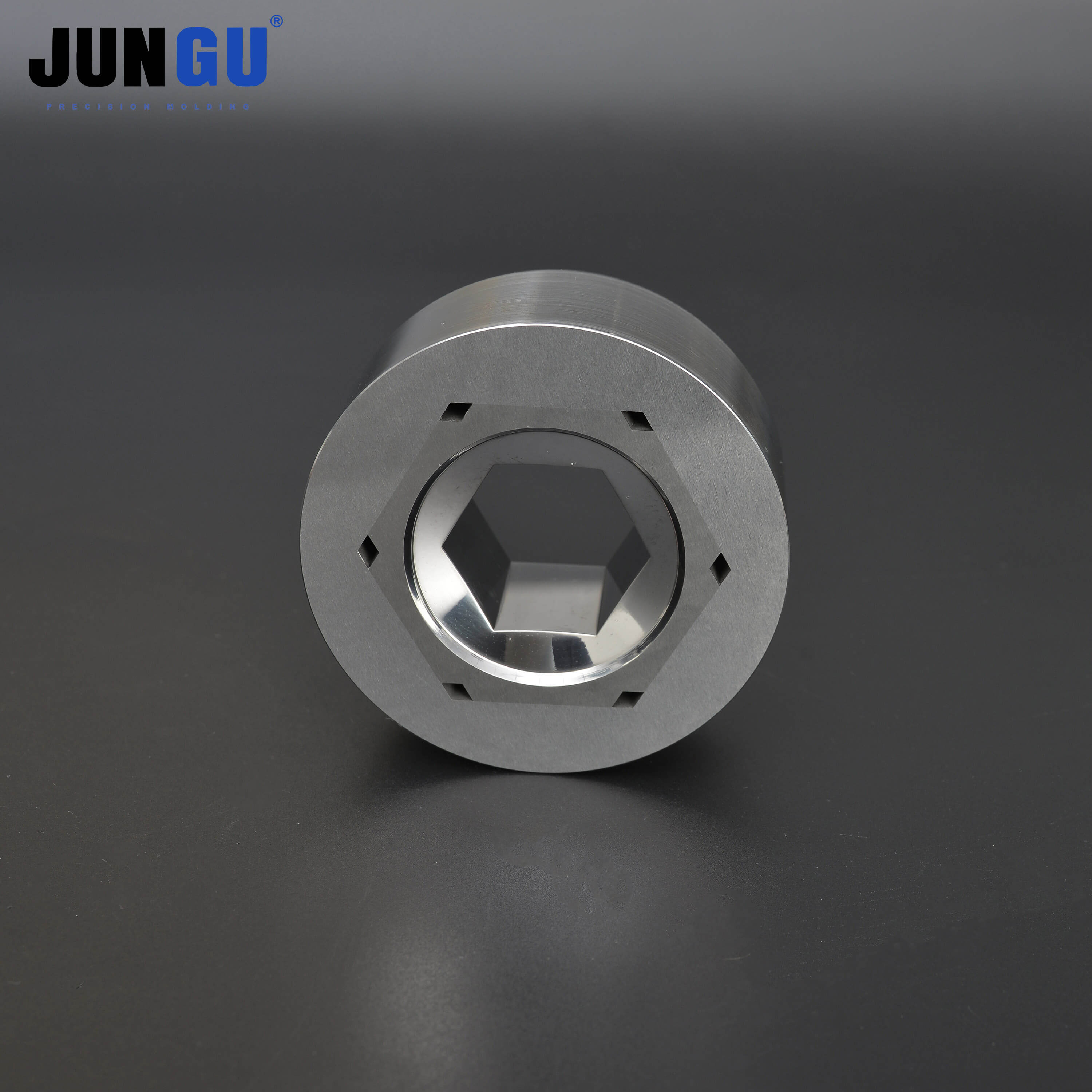
What is Tungsten Carbide Hexagonal Die for Metal Fasteners used for?
A tungsten carbide hexagonal die forms hex-shaped cavities, heads, or external profiles for cold-headed metal fasteners. Its failure is often concentrated at the corners. If blank volume is high, the hex radius is sharp, or the die case does not support the insert evenly, the carbide corner can chip before normal wear appears. If the part sticks in the cavity, corner wear may be caused by release angle or lubrication instead of carbide grade. Jungu reviews the hex drawing, across-flats or across-corners size, corner radius, blank diameter and length, material grade, die case support, insert depth, shrink-fit route, and photos of corner chipping, radial crack, sticking, or uneven fill before quoting.
Common sourcing use
Hexagonal fastener forming where corner radius, blank volume, carbide support, release angle, and die case fit control tool life.
Related product families
General hexagonal fastener die or dedicated hex bolt die?
Use this page for a broader external hex cavity or profile where the part drawing, cavity depth, release, insert support, and die-case fit define the tooling. For a conventional hex bolt head, the review should also start from blank volume, head height, shank transition, across-flats control, and the specific cold-heading station.
Technical Review Scope
What Jungu checks
- Hex drawing, across-flats or across-corners size, corner radius, depth, and tolerance
- Blank diameter, cut length, material grade, hardness, lubrication, and forming load
- Carbide grade, insert depth, shrink fit, die case support, release angle, and polish route
- Failure: corner chip, radial crack, sticking, uneven fill, head eccentricity, or short life
Why no standard price is shown
This hexagonal die is quoted from the actual cavity or external-profile drawing. Across-flats or across-corners dimensions, depth, release, blank condition, carbide support, insert depth, and die-case fit determine the tooling route.
Information Needed for Quotation
| Hex geometry | Drawing with hex dimensions, corner radius, depth, tolerance, and inspection method. |
|---|---|
| Blank and material | Blank size, material grade, hardness, lubrication, and surface condition. |
| Support route | Carbide grade, die case dimensions, insert depth, shrink fit, and release angle. |
| Failure evidence | Photos of corner chipping, radial crack, sticking, poor fill, or worn cavity. |
Application and Buyer Fit
| Typical application | hexagonal fastener forming where corner radius, blank volume, carbide support, release angle, and die case fit control tool life |
|---|---|
| Buyer review focus | hex size, corner radius, blank volume, carbide support, die case fit, shrink fit, sticking, and corner crack evidence |
| Quotation basis | drawing, material, tolerance, machine model, quantity, and target tool life |
| Review output | a carbide hex die route matched to corner load, support structure, material flow, and inspection tolerance |
Inquiry Process
- Send drawings and application details.
- Jungu reviews manufacturability and tooling route.
- Engineering confirms material, tolerance, and mould-life target.
- Quotation and lead time are prepared after technical confirmation.
FAQ
Why do hexagonal dies chip at the corners?
High pressure, small radius, weak support, off-center load, or sticking can overload the corner.
Can the same die case be reused?
Only after checking case wear, support fit, shrink interference, and whether the old case caused the crack.
Does polishing solve sticking?
Not alone. Release angle, lubrication, blank volume, and material pickup must be checked.
When should this be reviewed as a bolt-head die?
When the hex geometry belongs to a defined bolt head and its blank volume, head height, shank transition, and heading station control the load, use the dedicated hex bolt die review.
Need this tooling reviewed?
Send drawings, machine model, material, and current failure photos for review.