
Segmented Dies
Open-Close Dies for Fastener Cold Forming
Open-close die assemblies for fastener cold forming where the cavity must open for part release and close repeatably for the next stroke. Jungu reviews the split layout, matched faces, cavity transitions, support, and machine interface from drawings and samples before quotation.
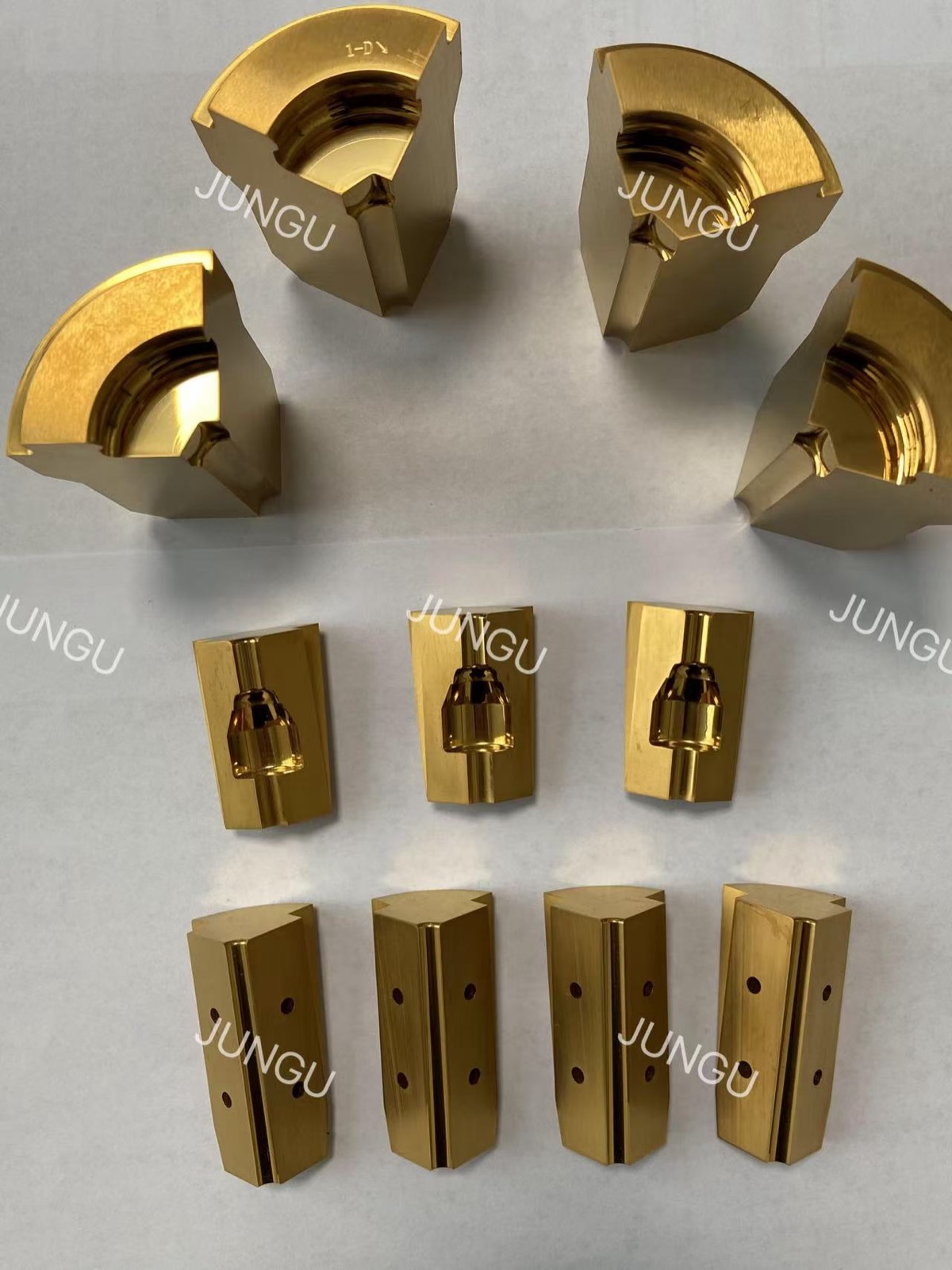
When does a fastener need an open-close die assembly?
An open-close die assembly uses matched die sections that separate for part release and return to a defined position before the next forming stroke. It is useful when a closed cavity would make release difficult, when the part has a shoulder or internal profile that needs access, or when a segmented structure gives better support around a non-standard fastener shape. The opening movement is only one part of the tooling decision. The split line, locating features, cavity match, support behind each section, and closing repeatability determine whether the formed part stays consistent. A photo can show the general structure, but it cannot establish the seam allowance, critical cavity dimensions, material route, or machine interface. Jungu reviews those points from the drawing, assembly photos, samples, and current failure evidence before selecting a tooling route.
Common sourcing use
Fastener cold forming with a split cavity, controlled release, and a non-standard head, shoulder, internal recess, or profile.
Related product families
When is an open-close die the right review route?
Use this route when the tooling must separate to release the part, expose a cavity, or accommodate a non-standard profile while returning to a repeatable forming position. If the part can be formed and released through a fixed cavity, a conventional bolt, screw, or segmented die may be simpler. The choice should follow the release direction, split-line risk, support condition, and machine movement shown in the drawing and setup.
Technical Review Scope
What Jungu checks
- Finished-part drawing with the split line, functional surfaces, critical dimensions, and inspection points marked
- Segment count, orientation, locating features, fixing holes, matched faces, and cavity transitions
- Die case or holder dimensions, support behind the inserts, opening and closing travel, and machine interface
- Material and heat-treatment route, surface-treatment requirement, lubrication, and current production condition
- Failure evidence: seam mark, flash or fin, incomplete fill, sticking, loose closing, segment chip, crack, or uneven wear
Why no standard price is shown
This is B2B custom tooling. A reliable quotation depends on drawing, material, size, tolerance, machine setup, annual quantity, and the mould-life issue the buyer wants to solve. Jungu quotes after technical review instead of showing a misleading fixed price.
Information Needed for Quotation
| Part and cavity drawing | Finished-part drawing with the seam location, critical surfaces, tolerances, cavity profile, and inspection method. |
|---|---|
| Assembly and interface | Separated and assembled photos, segment orientation, fixing method, die-case dimensions, and machine model. |
| Process information | Material grade, blank size, forming sequence, opening and closing timing, lubrication, and target production condition. |
| Failure evidence | Photos of seam marks, flash, sticking, incomplete fill, chipped segments, cracks, loose closing, or uneven wear. |
| Material route | Required base material, heat treatment, surface treatment, and any existing tool or sample available for comparison. |
Application and Buyer Fit
| Typical application | fastener cold forming with a split cavity, controlled release, and a non-standard head, shoulder, internal recess, or profile |
|---|---|
| Buyer review focus | split-line position, matched-face contact, cavity alignment, opening and closing clearance, support behind the sections, release direction, and wear marks |
| Quotation basis | finished-part and cavity drawings, segment arrangement, machine interface, opening and closing sequence, material route, and current failure evidence |
| Review output | an open-close die route matched to the part geometry, segment layout, support condition, release direction, and machine interface |
Inquiry Process
- Send the finished-part drawing, die photos, machine model, material, and current failure evidence.
- Jungu maps the split line, cavity access, locating method, support surfaces, and opening or closing sequence.
- Engineering confirms the material route, tolerances, surface-treatment requirement, inspection points, and interface dimensions.
- A quotation and delivery route are prepared after the die structure and review scope are technically clear.
FAQ
What is the difference between an open-close die and a standard segmented die?
A standard segmented die may be selected mainly for cavity support or a special profile. An open-close die must also control how the sections separate, locate, and return to the forming position. The opening sequence and matched-face repeatability become part of the tooling review.
Can Jungu make the die from product photos alone?
Photos help us identify the segment layout and visible failure marks, but they are not enough for a reliable quotation. Send the part drawing, critical dimensions, segment arrangement, machine interface, and at least one assembled view.
What causes a seam mark on the formed fastener?
The cause may be split-line position, mismatch between faces, closing clearance, material flow, flash control, or movement during the stroke. Changing carbide grade without checking the closing condition usually leaves the mark unchanged.
Can an existing die case be reused?
Possibly, after checking the bore, support shoulder, locating surfaces, wear, and the fit of the new sections. A worn case can make a correctly matched open-close die close off-center.
Need this tooling reviewed?
Send drawings, machine model, material, and current failure photos for review.