
Header Punches & Punch Pins
Hexagon Hole Punch and Die Set
Hexagon hole punch and die set for internal recess or hole forming. Jungu checks punch corner radius, die support, alignment, material route, and broken-corner pattern before quoting.
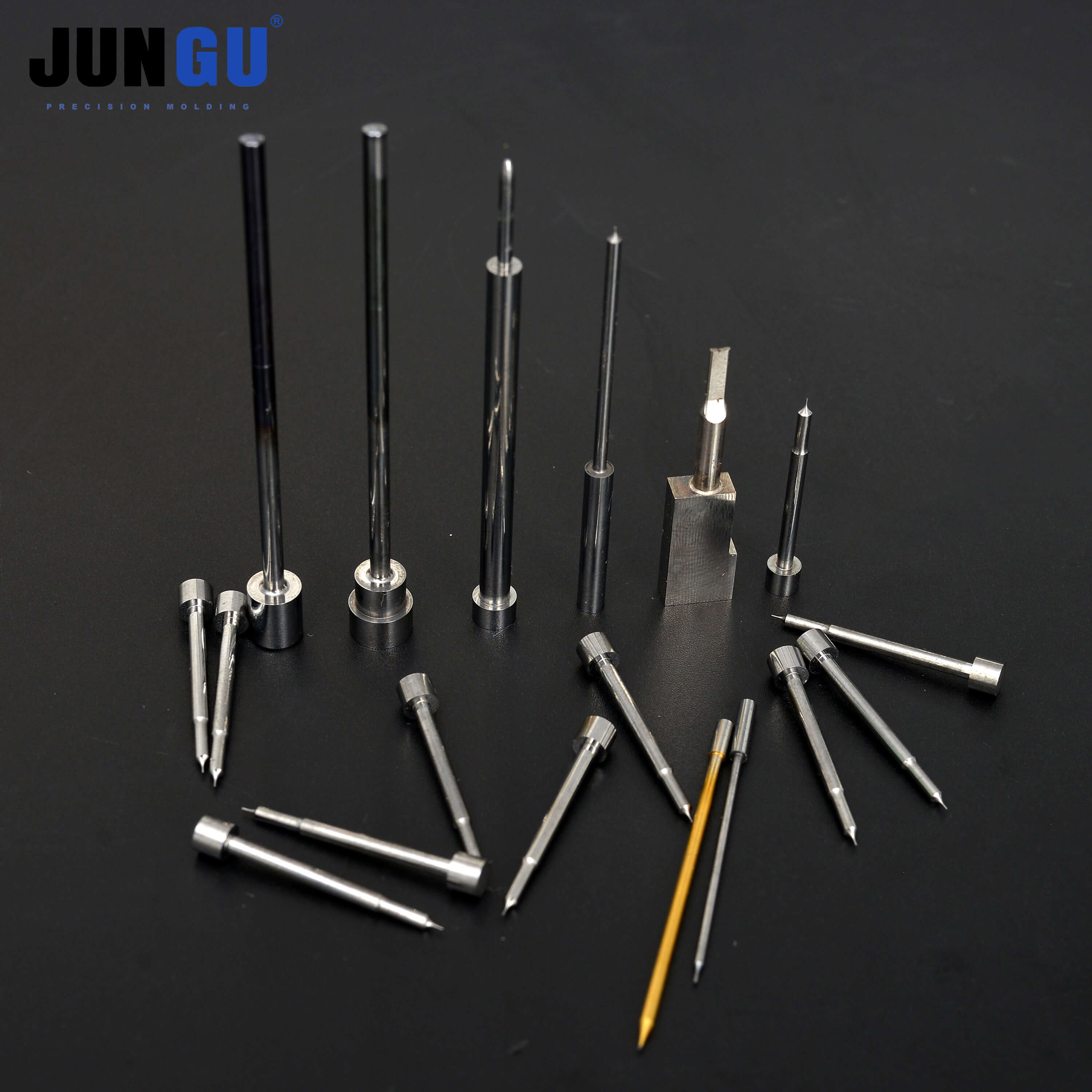
What is Hexagon Hole Punch and Die Set used for?
A hexagon hole punch and die set forms an internal hex recess, through-hole, or shaped cavity in fasteners and precision metal parts. It must be reviewed as a set because the punch corner, die support, material flow, and station alignment work together. If the punch is slightly off-center, one corner takes more load and chips early. If the die cavity does not support material flow, the hex wall may tear or fill unevenly. Jungu reviews the hole drawing, across-corners size, depth, corner radius, punch length, die cavity, material grade, station alignment, coating route, and photos of broken corners, galling, shallow holes, or uneven fill before quoting.
Common sourcing use
Internal hex hole or recess forming where punch corner load, die support, and alignment control accuracy and tool life.
Related product families
Technical Review Scope
What Jungu checks
- Hole drawing, across-corners size, depth, corner radius, wall thickness, and tolerance
- Punch length, holder fit, die cavity, support area, and station alignment
- Workpiece material, hardness, lubrication, coating route, and target output
- Failure: corner chip, galling, shallow hole, torn wall, uneven fill, or punch bending
Why no standard price is shown
This is B2B custom tooling. A reliable quotation depends on drawing, material, size, tolerance, machine setup, annual quantity, and the mould-life issue the buyer wants to solve. Jungu quotes after technical review instead of showing a misleading fixed price.
Information Needed for Quotation
| Hole geometry | Drawing with hex size, depth, radius, wall thickness, and inspection method. |
|---|---|
| Tool set | Punch drawing, die cavity, holder fit, station number, and assembly photos. |
| Material route | Workpiece material, hardness, lubrication, coating preference, and production target. |
| Failure evidence | Photos of broken corners, shallow holes, torn walls, galling, or uneven fill. |
Application and Buyer Fit
| Typical application | internal hex hole or recess forming where punch corner load, die support, and alignment control accuracy and tool life |
|---|---|
| Buyer review focus | hex hole size, corner radius, punch length, die cavity support, station alignment, material grade, and broken-corner evidence |
| Quotation basis | drawing, material, tolerance, machine model, quantity, and target tool life |
| Review output | a punch-and-die route matched to internal hex geometry, support, coating route, and inspection method |
Inquiry Process
- Send drawings and application details.
- Jungu reviews manufacturability and tooling route.
- Engineering confirms material, tolerance, and mould-life target.
- Quotation and lead time are prepared after technical confirmation.
FAQ
Why does one hex corner fail first?
One corner may take more load because of punch runout, station alignment, die support, or uneven material flow.
Can the punch be changed without changing the die?
Sometimes, but Jungu checks both sides because die support can cause punch failure.
Does TiN or TiCN coating solve galling?
Only after material, lubrication, and contact pressure are reviewed. Coating alone cannot fix misalignment.
Can this product be customized?
Yes. Jungu manufactures fastener mould tooling according to buyer drawings, samples, and machine requirements.
Need this tooling reviewed?
Send drawings, machine model, material, and current failure photos for review.