
Header Punches & Punch Pins
Titanium-Coated Punch Pin for Brass and Metal Parts
Titanium-coated punch pin tooling for brass and metal part forming. Jungu checks coating route, substrate support, contact pressure, material pickup, and wear pattern before quoting.
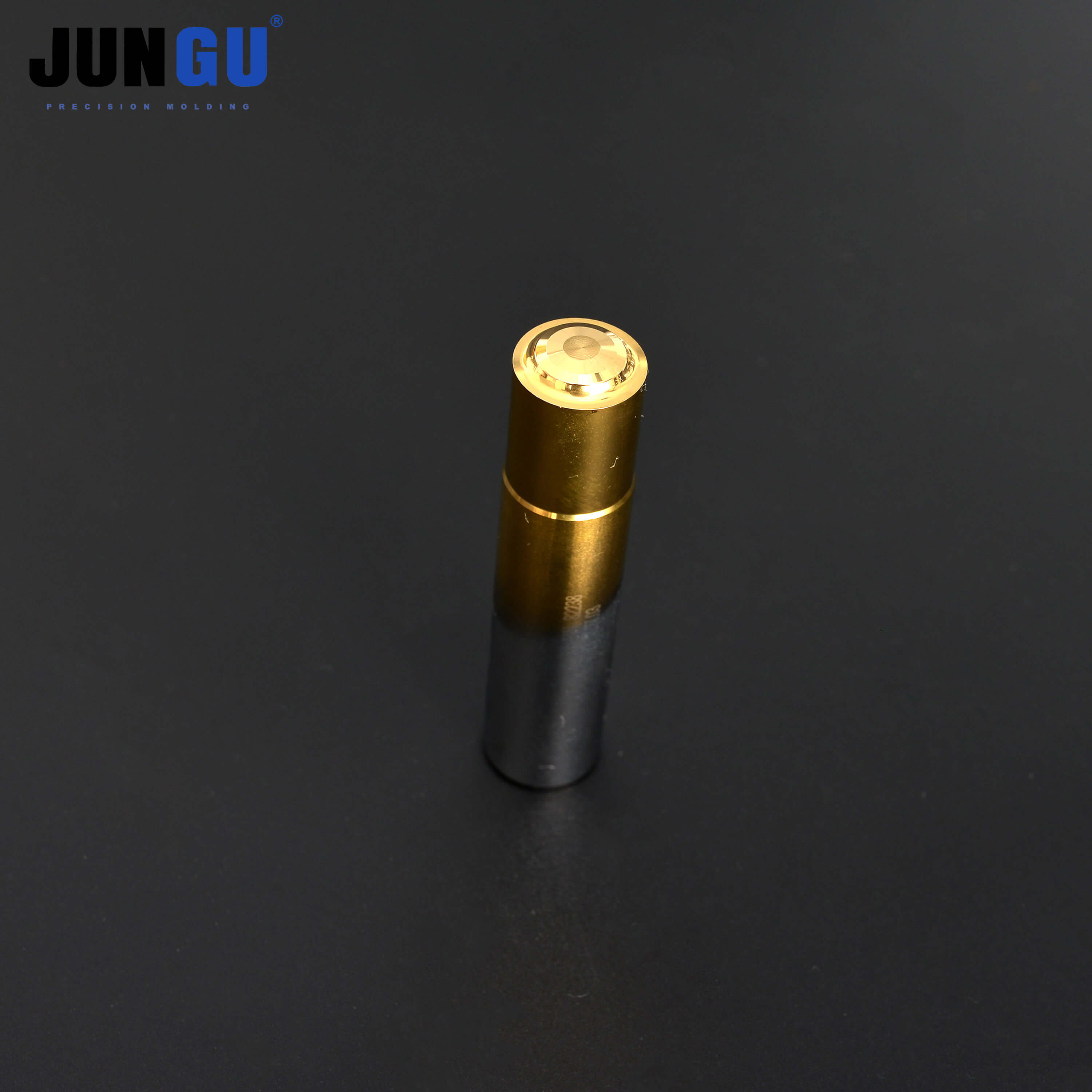
What is Titanium-Coated Punch Pin for Brass and Metal Parts used for?
A titanium-coated punch pin is used when the buyer wants to reduce galling, pickup, or abrasive wear during brass and metal part forming. The coating is not a standalone fix. If the punch substrate is too soft, the coating can crack with the base material. If alignment is poor, the coating wears on one side and the part still shows scratches. If lubrication or cleaning is unstable, material pickup can continue even with a coated surface. Jungu reviews the part drawing, punch geometry, base material, hardness route, coating target such as TiN or TiCN, workpiece material, station alignment, lubrication, and photos of coating wear, galling, scratches, or chipped edges before quoting.
Common sourcing use
Coated punch pin forming where coating selection, base material, alignment, lubrication, and contact pressure decide whether galling is reduced.
Related product families
Technical Review Scope
What Jungu checks
- Punch drawing, tip radius, working length, holder fit, contact pressure, and tolerance
- Base material, hardness route, coating type, coating thickness expectation, and surface polish
- Workpiece material, lubrication, cleaning, station alignment, and transfer contact
- Failure: coating wear, one-side wear, galling, material pickup, chipping, scratch marks, or short life
Why no standard price is shown
This is B2B custom tooling. A reliable quotation depends on drawing, material, size, tolerance, machine setup, annual quantity, and the mould-life issue the buyer wants to solve. Jungu quotes after technical review instead of showing a misleading fixed price.
Information Needed for Quotation
| Punch geometry | Punch drawing, tip form, working length, holder interface, and contact area. |
|---|---|
| Coating route | Base material, hardness target, TiN/TiCN or other coating target, polish finish, and coating expectation. |
| Process data | Workpiece material, lubrication, cleaning, station alignment, and surface requirement. |
| Failure evidence | Photos of galling, material pickup, coating wear, chipped edges, scratches, or one-side wear. |
Application and Buyer Fit
| Typical application | coated punch pin forming where coating selection, base material, alignment, lubrication, and contact pressure decide whether galling is reduced |
|---|---|
| Buyer review focus | coating target, base material hardness, punch geometry, workpiece material, alignment, lubrication, pickup, and coating wear pattern |
| Quotation basis | drawing, material, tolerance, machine model, quantity, and target tool life |
| Review output | a coated punch route matched to substrate support, surface finish, contact pressure, and buyer inspection target |
Inquiry Process
- Send drawings and application details.
- Jungu reviews manufacturability and tooling route.
- Engineering confirms material, tolerance, and mould-life target.
- Quotation and lead time are prepared after technical confirmation.
FAQ
Will titanium coating always stop galling?
No. Coating helps only when base material, polish, contact pressure, lubrication, and alignment are also correct.
How do you choose TiN or TiCN?
Jungu reviews material, pressure, surface requirement, temperature, and current wear marks before recommending a route.
Why does coating wear on one side?
One-side wear usually points to misalignment, holder fit, transfer contact, or uneven load rather than coating type alone.
Can this product be customized?
Yes. Jungu manufactures fastener mould tooling according to buyer drawings, samples, and machine requirements.
Need this tooling reviewed?
Send drawings, machine model, material, and current failure photos for review.