
Header Punches & Punch Pins
Custom Ball Head Punch Tool Pin Punch
Custom ball head punch tool pins for special head forming and profile control. Jungu checks radius transition, punch alignment, impact load, and polishing requirement.
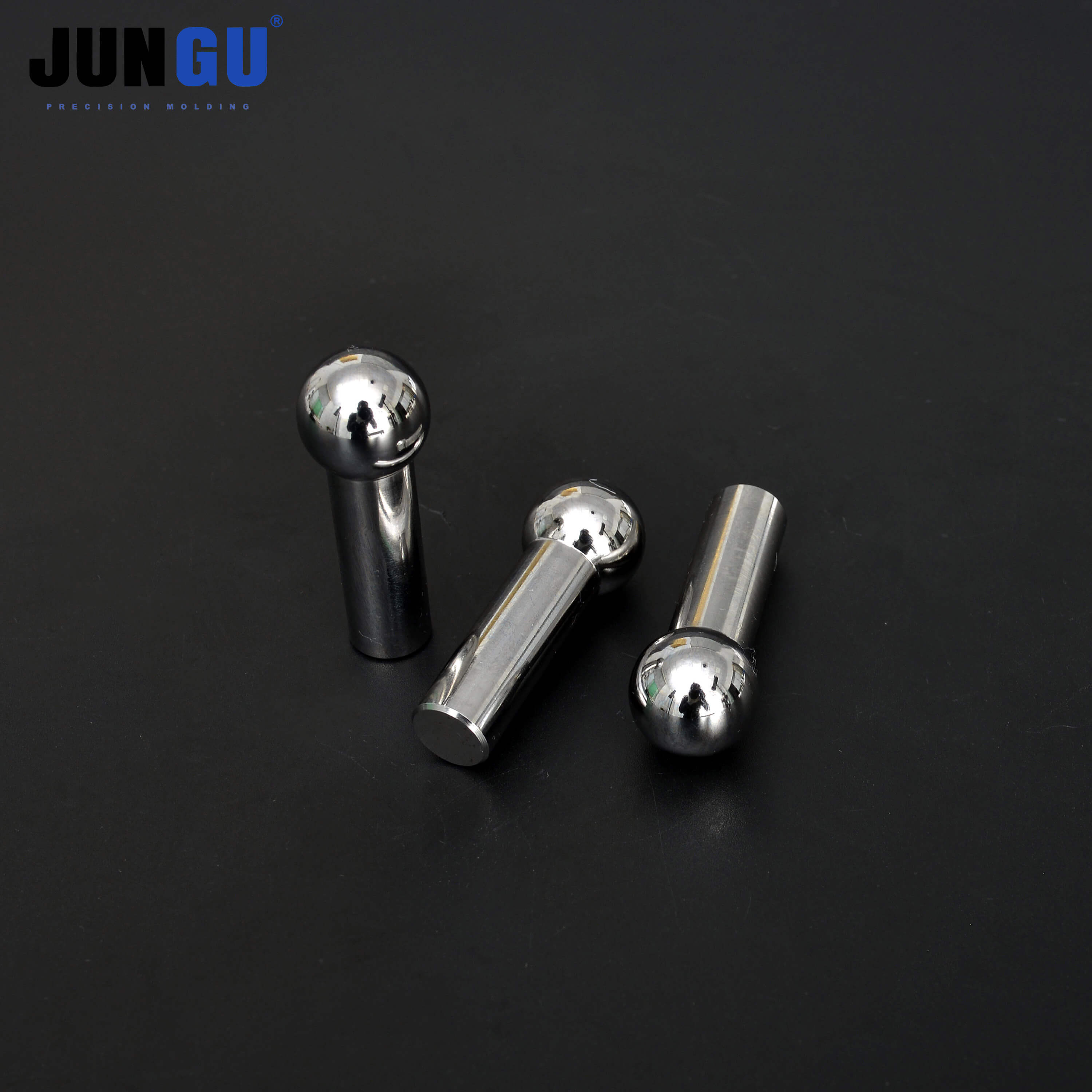
What is Custom Ball Head Punch Tool Pin Punch used for?
A ball head punch tool pin is used when the formed part needs a rounded head, ball profile, or smooth transition that a flat punch cannot create. The common failure is not only tip wear; the transition between ball radius and shank can concentrate stress, especially when the material is hard or the punch is slightly misaligned. Surface finish also matters because a rough ball head can drag material and leave marks on the formed part. Jungu reviews the ball radius, head height, shank diameter, punch length, machine station, fastener material, coating route, polishing requirement, and photos of worn tips or cracked transitions before quoting. We compare the formed surface mark with the punch surface because polishing, radius, and alignment leave different evidence.
Common sourcing use
Head forming, piercing, stamping, and special-shaped punch operations in fastener production.
Related product families
Technical Review Scope
What Jungu checks
- Ball radius, head height, shank diameter, transition radius, tolerance, and surface finish
- Punch length, station alignment, impact load, material grade, coating, and polishing route
- Current issue: cracked transition, flattened ball head, surface drag mark, galling, or bending
Why no standard price is shown
Ball-head punch pricing depends on the radius, transition geometry, shank support, material and coating route, polishing requirement, and the evidence left by the current failure. One outside photo cannot define that route.
Information Needed for Quotation
| Drawing | 2D drawing, 3D file, or sample photos with critical dimensions. |
|---|---|
| Production Context | Fastener type, material, machine model, station count, and annual demand. |
| Quality Target | Tolerance, surface finish, coating, target mould life, and current failure mode. |
| Commercial Context | Prototype quantity, mass-production demand, target delivery time, and destination country. |
Application and Buyer Fit
| Typical application | head forming, piercing, stamping, and special-shaped punch operations in fastener production |
|---|---|
| Buyer review focus | head geometry, punch material, coating, hardness, machine station, wear pattern, and impact load |
| Quotation basis | drawing, material, tolerance, machine model, quantity, and target tool life |
| Review output | a custom punch route matched to the drawing, production line, and tool-life target |
Inquiry Process
- Send drawings and application details.
- Jungu reviews manufacturability and tooling route.
- Engineering confirms material, tolerance, and mould-life target.
- Quotation and lead time are prepared after technical confirmation.
FAQ
Why does the transition area crack?
The load changes direction around the ball-to-shank transition. A small radius, hard material, or alignment error can concentrate stress there.
Is mirror polishing needed?
It depends on the visible surface requirement and material flow. Smooth finish can reduce drag marks but does not replace correct geometry.
Can a worn ball-head punch be copied directly?
A sample helps, but wear can flatten the radius or hide the original transition. Send the part drawing, punch interface, machine station, and formed-part photos as well.
Which failure photos are most useful?
Send the complete punch, the ball-to-shank transition from at least two angles, the damaged surface close-up, and the matching mark on the formed part.
Need this tooling reviewed?
Send drawings, machine model, material, and current failure photos for review.